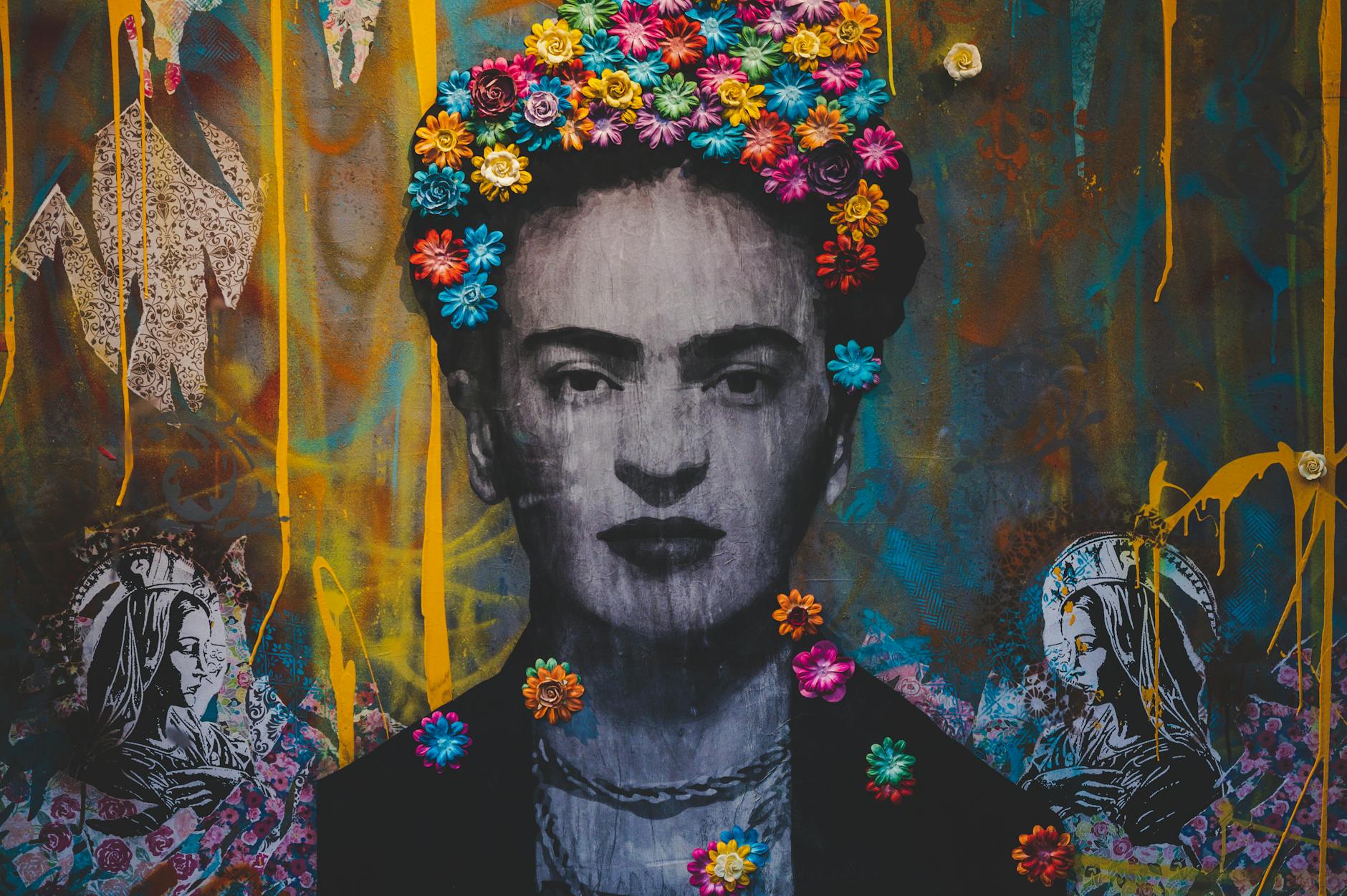
Photo by Brett Sayles via Pexels
I didn't go vegan because of a single movie. I went vegan because I'd milked animals, watched them die on biodynamic farms in the English countryside, and spent a decade trying to unsee it. I ran a donkey farm in Athens. I bonded with creatures that trusted me. Then I learned to cook without them at a two-year chef programme at IEK SVIE — and that was the final wall coming down. But art? Art is what kept the wound open. Art wouldn't let me forget.
That's what art does. It bypasses the arguments, the rationalizations, the "yeah but" defenses people build around their plates — and goes straight for the part of you that still knows right from wrong. No amount of data can do what one scene from Dominion does in thirty seconds.
And the data backs this up. Faunalytics research found that 42% of new vegans who watched graphic footage in the month before transitioning were more likely to stay vegan after six months. A 2015 study in Appetite found that exposure to vegan media increases willingness to reduce meat consumption — especially when it connects to values people already hold. Art doesn't argue with your defenses. It goes around them.
Here's the art that changed me. Some of it might change you.
The Documentaries That Made People Stop Eating
In a survey of over 11,000 people about which documentary most influenced their decision to go vegan, Cowspiracy (2014) came in first at 21.8%, followed by Earthlings (2005) at 17.6%. These aren't niche films anymore. They're conversion engines.
But the one that hit me hardest was Dominion (2018). Directed by Chris Delforce, narrated by Joaquin Phoenix and Rooney Mara. It uses drone footage and hidden cameras to document standard industry practices — not outliers, not undercover stings, just what happens every day in farms and slaughterhouses. Pigs gassed in CO2 chambers. Chicks ground alive. Dairy cows separated from their calves.
I watched it alone on a Tuesday night. I didn't finish dinner. I'd barely been eating meat anyway — years of farming had already hollowed out every justification. But that film sealed the last crack shut.
People say it's propaganda. It's footage. The camera doesn't have an opinion. It just shows you what's there. In 2019, a coordinated Australian screening drew 55,000 views in 48 hours and an associated Melbourne march drew 3,000+ demonstrators — the largest animal rights march in Australian history at that time.
Then there's Okja (2017), which Bong Joon-ho — the director of Parasite — built as a Trojan horse. It's a kid's adventure movie about a girl and her genetically engineered super-pig. Funny. Beautiful. And then it takes you to the slaughterhouse. The genius is that it makes you love an animal before showing you what we do to animals like her. By the time you see the processing plant scene, you're not watching statistics. You're watching someone you care about walk into a kill line.
The Books That Built the Movement
Before the films, there were books. And one of them changed Western law.
Ruth Harrison's Animal Machines (1964) was the first book to expose factory farming conditions to the public — battery cages, veal crates, sow stalls. The impact was immediate: within three weeks of publication, Harrison was nationally famous. The British government appointed the Brambell Committee, which established the Five Freedoms of animal welfare — a framework that still underpins animal welfare law across Europe. That one book led directly to the UK's first farm animal welfare law (1968), the EU ban on battery cages (2012), and the recognition of animals as sentient beings in EU treaties.
One woman. One book. Sixty years of legislative impact. Tell me art doesn't matter.
Peter Singer's Animal Liberation (1975) coined the term "speciesism" and became the philosophical foundation of the modern animal rights movement. Time magazine named it one of the 100 best nonfiction books published since 1923. Singer updated it in 2023 as Animal Liberation Now, with a foreword by Yuval Noah Harari — because the arguments haven't changed. They've just gotten harder to ignore.
Carol J. Adams' The Sexual Politics of Meat (1990) drew a line between the exploitation of animals and the exploitation of women. Her concept of the "absent referent" — how language hides the living animal behind words like "beef," "pork," and "poultry" — is one of those ideas that rewires how you think about everything. It's dense. It's academic. It's the kind of frustrating that means something is actually challenging you.
And Han Kang's The Vegetarian (2007) won the International Booker Prize by showing what happens when one woman simply stops eating meat. Her family treats her like she's lost her mind. What Kang captures is how refusing meat isn't just a dietary choice — it's a disruption. It threatens people. It exposes the unspoken rules about conformity and what's considered "normal." If that doesn't sound familiar to every vegan who's ever sat through a family dinner, I don't know what does.
The Artists Who Made the Invisible Visible
Jo-Anne McArthur started photographing animals in captivity alone, funding her work through bridal portraits, sneaking into factory farms at night, risking arrest. That was 2003. By 2025, her We Animals Media project has grown to 120+ photojournalists in 80+ countries — the largest visual archive of animal exploitation on earth. Her book HIDDEN: Animals in the Anthropocene (2020, foreword by Joaquin Phoenix) won the Independent Publisher Book Award for "Most Likely to Save the Planet." She's won Wildlife Photographer of the Year, the Alfred Fried Peace Award, and Nature Photographer of the Year. One person. Twenty years. A global movement.
Aitor Garmendia, a Spanish photographer, spent two years (2016-2018) gaining access to 16 slaughterhouses across Spain, documenting the killing of cows, pigs, lambs, chickens, and rabbits. His project Tras los Muros (Behind the Walls) won the International Photography Awards in 2018. Then he moved to factory farms — investigating 32 pig farms across three Spanish regions between 2019 and 2020. He photographs what the industry doesn't want you to see, and he puts his body and his freedom on the line to do it.
And Sue Coe has been drawing the inside of slaughterhouses since the 1980s. Her Porkopolis series (1988) — 60 charcoal drawings from American slaughterhouses — was intended as a visual update to Upton Sinclair's The Jungle. Her book Dead Meat (1995) won the Genesis Award. Coe's images have the urgency of someone trying to save a life. Because she is.
The Music That Plants Splinters
Morrissey is a complicated person. I'm not here to defend everything he's ever said. But "Meat Is Murder" — the title track of The Smiths' 1985 album, their only record to hit #1 in the UK — is four minutes that burrowed into my brain and never left. It opens with the sound of a cow mooing. Then Morrissey's voice, cold and direct: "Heifer whines could be human cries." Guitarist Johnny Marr said in 2010: "20 years on people tell me they became a vegetarian as a result of Meat Is Murder."
I first heard it at 19. I didn't go vegetarian then. But it planted something. A splinter. And splinters have a way of working themselves deeper over time.
Then there's Moby — vegan since 1987, "ANIMAL RIGHTS" tattooed on both arms, "VEGAN FOR LIFE" on his neck. He composed the score for Earthlings. He opened Little Pine, an organic vegan restaurant in LA whose profits go entirely to animal rights organizations. In 2025, he released Punk Rock Vegan Movie, tracing how the punk and hardcore scenes of the late '70s and '80s seeded the animal rights movement. The vegan straight edge bands — Earth Crisis, Propagandhi, Rise Against — made animal liberation central to a generation of hardcore kids who went on to build the nonprofits, sanctuaries, and advocacy organizations that exist today.
Why This Matters More Than Arguments
I've been in a hundred arguments about veganism. I've cited studies, dropped statistics, named names. And you know what changes people's minds more than any of that? A scene from a movie. A lyric that sticks. A novel that lets them feel what an animal feels for just one moment.
That's why the meat industry spends billions on marketing — on happy cows in green fields, on cartoon chickens smiling at you from packaging. They know that images and stories shape behavior more than facts do. The difference is they're selling a lie. The artists on this list are showing you what's real.
In 2025, Gretchen Ryan — a quadriplegic painter — unveiled "Liberty Leading the Animals," a 13-foot-wide painting depicting over 150 animals, at the AVA Summit in Los Angeles. She spent six years making it. In 2026, the movement keeps growing: the Vegan and Animal Rights Conference in Manchester drew activists from dozens of countries. The art keeps coming because the suffering hasn't stopped.
I've spent years collecting every film, book, album, and photograph on this list. I noticed something: the works that changed me the most weren't the ones with the best arguments. They were the ones that made me feel something I couldn't rationalize away. Watch Dominion. Read The Vegetarian. Look at Jo-Anne McArthur's photographs. Put on "Meat Is Murder" and actually listen to it. If none of it moves you, fine. But if it does — if something shifts — pay attention to that. That shift is the beginning.
And if you want to know what the first few months actually feel like — the grocery store confusion, the awkward dinners, the social friction — nobody tells you about what comes next.
References
- Dominion (2018) — Free to watch at dominionmovement.com
- Faunalytics — Which Documentaries Are Most Effective? (Survey of 11,000+ participants)
- Piazza et al. (2015) — Rationalizing meat consumption: The 4Ns. Appetite
- Peter Singer — Animal Liberation Now (2023 updated edition)
- Carol J. Adams — The Sexual Politics of Meat (Bloomsbury)
- Han Kang — The Vegetarian (Penguin Random House)
- We Animals Media — Jo-Anne McArthur's global photojournalism project
- Tras los Muros — Aitor Garmendia's Spanish slaughterhouse documentation
- Sue Coe — Artist and social activist
- Ruth Harrison — Animal Machines (1964) and the Brambell Report