Latest

Your 'Local Farm' Argument Doesn't Survive Five Minutes of Math
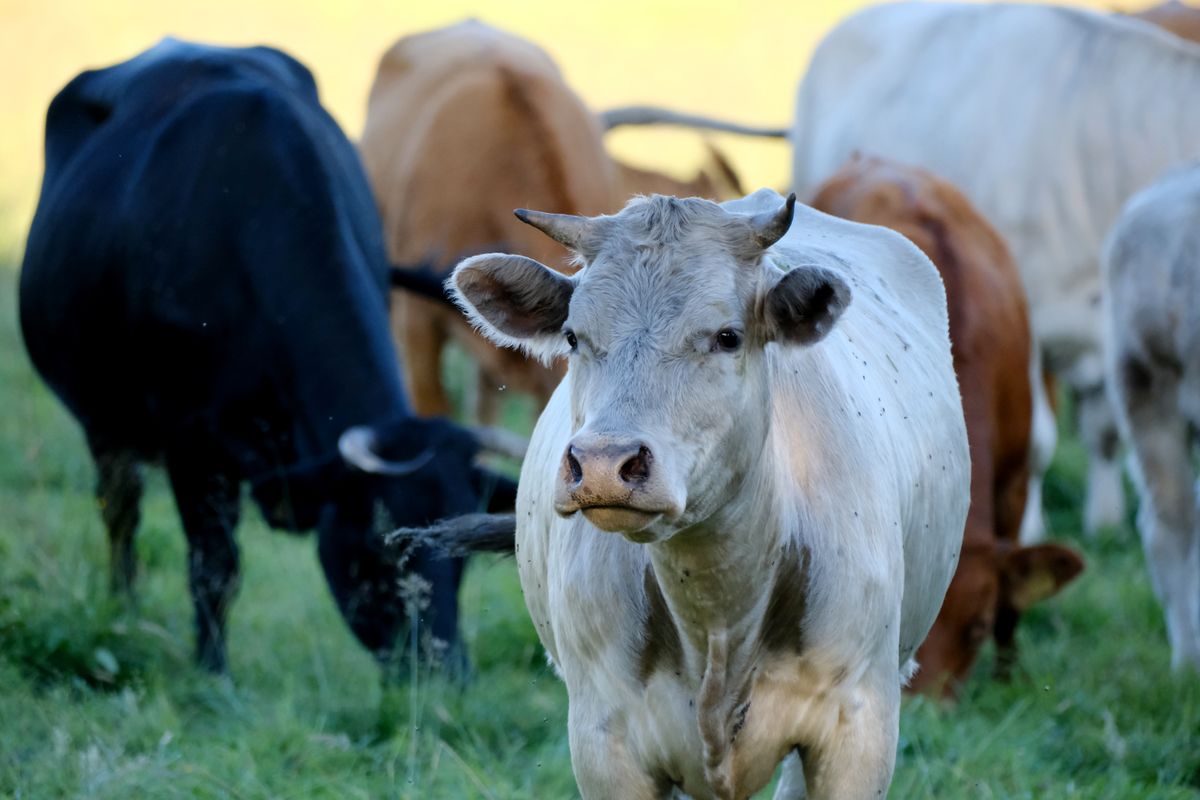
Herd of cattle grazing in lush green pasture

Photo by Roman Biernacki via Pexels

How many cows would the planet actually need if every meat-eater "bought local"? More than the planet has room for, and more than the climate can survive. That's the short answer.

I milked dairy cows by hand at a biodynamic farm in Sussex, England. Highest welfare standards on Earth. Picture the Instagram fantasy — wooden fences, cows with names, a farmer who reads philosophy while he forks hay. I watched them slaughter cattle there too. The cow doesn't care that the field she lived in was beautiful. She cares that you're killing her.

I'm telling you this because every time I write something about meat, somebody slides into the comments with the same line: "But I only buy from a local farm. From a small operation. From a regenerative producer." As if geography is a moral force field. As if the cow's death is offset by the farmer's authenticity.

So let's actually do the math on the local farm argument. Five minutes. That's all it takes to fall apart.

The Land Math Is Genocidal — Pick a Different Word If You Want But It Stays

Right now, beef cattle use roughly 60% of the world's agricultural land while delivering less than 2% of global calories and around 5% of global protein. That's the baseline. That's industrial beef — feedlots, soy and corn shipped in, animals confined for the final months. The land cost is already insane.

Now imagine your "buy local, buy grass-fed" world. Take cattle off feed and put them on pasture. They grow slower. They produce less meat per animal. Per kilogram of beef, you need more land, more time, more cows.

How much more? A 2018 study by Hayek and Garrett at Harvard ran the numbers for the United States alone. Going 100% grass-fed at current beef demand would require an extra 200,000 square miles of pasture — bigger than New York, Pennsylvania, Florida, and Ohio combined. A different Harvard analysis found that pure pasture systems would need 30% more cattle to produce the same beef.

That's the United States. One country. Now scale that demand structure to 8 billion humans. Where does the extra land come from? The Food and Agriculture Organization already tracks about a quarter of the planet's total land surface as grazing land. There's no second Earth lying around for the rest.

So when somebody says "we should all eat meat from small local farms," what they're actually saying is: "I'd like to triple the land footprint of an industry that's already eating the planet. And I'd like the bottom 80% of humans to keep eating beans while I do it." Cool plan.

Grass-Fed Beef Has More Methane, Not Less

Now the part that breaks people's brains. The marketing for grass-fed beef sells you a climate-friendly steak. You picture the cow chewing native prairie grass, sequestering carbon, healing the soil. The carbon-neutral burger.

The math says no. Per kilogram of beef, grass-fed cattle emit more methane than feedlot cattle, not less. A March 2025 paper in PNAS by Eshel and colleagues — peer-reviewed, hard to wave away — concluded that US grass-fed beef is as carbon intensive as industrial beef and roughly 10 times more carbon intensive than common protein-dense alternatives. The Harvard work I cited earlier estimated grass-fed methane emissions 43% higher than the conventional system at scale.

Why? Two reasons. First, grass is harder for ruminants to digest than corn — more cellulose and lignin, more enteric fermentation, more methane belched out per pound of beef produced. Second, grass-fed cattle live longer before slaughter. Eighteen to thirty months instead of fourteen. Did the marketing brochure mention that the longer life is part of the climate problem? Of course it didn't. Eighteen to thirty months of methane emissions per cow, distributed across a smaller carcass.

Allan Savory, the patron saint of "holistic grazing," gave a TED talk in 2013 claiming we could reverse climate change by putting more cattle on more grasslands. The Food and Climate Research Network spent two years and reviewed over 300 studies in their 2017 "Grazed and Confused" report. Their conclusion: even under the most generous assumptions, soil carbon sequestration from grazing offsets only 20% to 60% of livestock's own emissions. Net positive climate impact? Not happening. Even the soil-sequestration story has its own ceiling — over a few decades soil saturates and stops absorbing additional carbon.

The "regenerative grazing" movement keeps quoting Savory because his slogan is good for selling steak. The peer-reviewed literature — Poore and Nemecek 2018 in Science, the FCRN team, Eshel's PNAS paper, the Oxford Nature Food group — keeps saying the same thing in different words. There is no version of beef that scales.

"Local" Is the Weakest Variable in the Whole Equation

Here's the part that should make every locavore close their laptop and reconsider their personality.

The classic study on this is Weber and Matthews 2008 in Environmental Science & Technology. They ran life-cycle analysis on the average American household's food carbon footprint and found that transportation accounts for roughly 11% of food-related emissions. The final delivery from producer to retail — the "food miles" you've been obsessing about — is just 4%. Production accounts for 83%.

Then they ran the gut-punch number: shifting less than one day per week's worth of calories away from red meat and dairy toward chicken, fish, eggs, or plants reduces more emissions than buying every single calorie locally. That's not a vegan op-ed. That's Carnegie Mellon engineering. The locavore credential card you've been carrying is worth less than skipping beef on Mondays.

Eat a beef burger sourced from a farm you can see from your kitchen window. Now eat a tofu wrap shipped 3,000 miles. The tofu still wins. By a lot. Because production emissions dwarf transport emissions, and beef production emissions dwarf everything.

The "Grass-Fed" Label Is Almost Meaningless in the US

Let me drop one more inconvenient fact. In January 2016, the USDA's Agricultural Marketing Service revoked the federal grass-fed labeling standard. They concluded they didn't have legal authority to enforce it. Producers can now self-define what "grass-fed" means.

That means the $22-per-pound strip steak in your local butcher's case might come from cattle that ate grass for 90 days and corn for the rest of their lives. Or that lived in confinement for the finishing period. Or that came from a multi-state meatpacker laundering ground beef under a small farm's logo. The Food Safety and Inspection Service approves the label based only on a feeding protocol the producer writes themselves. Confinement, antibiotics, hormones — all left to the rancher's preference.

The third-party certifications (American Grassfed Association, PCO Certified Grassfed, Animal Welfare Approved) tighten the rules, but those represent a tiny share of the market. The "grass-fed" sticker on a Whole Foods package, in most cases, is an aesthetic choice rather than a regulatory category. You're paying a 48% to 193% premium — current 2025 USDA grass-fed beef reports show grass-fed strip steak ranging from $16.88 to $22.38 per pound versus around $14 conventional — for a category that's enforced on the honor system.

The Small Farmer Doesn't Need You. The Animal Does.

I lived this. Two years at Emerson College in Sussex doing biodynamic agriculture. A year on my own donkey farm outside Athens, milking, naming, learning the personality of every animal I worked with. The romanticism is real. I'm not going to pretend the small-farm aesthetic is a marketing trick — those farms exist, those farmers care, and the animals there have lives that resemble lives.

And I'll tell you what I noticed. The cow's friend goes to the truck and doesn't come back, and the cow knows. The dairy cow who was just impregnated for the seventh time looks at you with the same eyes she had after the second one. The "humane" slaughter floor is calmer than a factory line, sure — but the ending is identical. A bolt gun, a knife, a body. There is no nice way to kill someone who doesn't want to die.

The small-farm argument confuses welfare with ethics. They're not the same. A two-year-old cow living on rotational pasture is treated better than a feedlot cow. That's true. The two-year-old cow still ends up in a body bag at age two when her natural lifespan is twenty. Better treatment doesn't redeem the killing — it just delays it under nicer conditions. You wouldn't accept that calculus for your dog. You wouldn't accept it for your neighbor's dog. You accept it for cows because the marketing told you they're food.

What the Argument Actually Is

I've been on both sides of this conversation. I know what you're really doing. You're not trying to convince me of anything — you're trying to convince yourself. The "local farm" frame is a cognitive escape hatch. It lets you keep the meals you grew up with and outsource the moral discomfort to a romantic narrative about a farmer you've never met.

And I get it. Going vegan in your forties — like I did, in 2019, after a decade of farming, donkey-milking, vegetarian-at-home-meat-at-restaurants confusion — is not painless. The food culture, the family table, the easy weeknight meal. None of that surrenders gracefully. So you reach for the label that lets you keep the beef and keep the conscience.

It just doesn't survive scrutiny. Let me put the entire local-farm argument in its actual form:

  • Land math: impossible at scale; current pasture is already 60% of farmland
  • Climate math: grass-fed emits more methane per kilo, not less; carbon offset claims fail peer review
  • Local math: transport is 4% of food emissions; what you eat matters 20× more than where it came from
  • Label math: "grass-fed" is unregulated in the US; you're paying a 48–193% premium for a self-policed claim
  • Ethics math: better welfare ≠ no harm; the animal still dies, just in a prettier field

The argument doesn't fail because vegans are mean. It fails because the numbers don't work, the climate doesn't care about your zip code, and the cow doesn't care about your farmer's beard.

What to Do With This

So what now? The next time someone hits you with "but I buy local," don't get into a fight. Share this post with them. Or send them the soy/Amazon math. Or the carbon-credits scam. Or the $38 billion subsidy paper. The data does the work that arguments can't.

And if you're the one making the argument — pause. Sit with it. The fact that you're reaching for "but local" means you already know factory meat is indefensible. You're 80% of the way to the answer. The remaining 20% is the part where you stop bargaining with yourself. You need to be honest about what the calculus is actually saying.

So here's the action item. Go vegan for a week. Seven days. No animal products. You should stop buying the romantic story too — try the math instead. If the math holds at the end of those seven days — and it will — keep going. Time to make the change.

References

  1. Eshel, G., Stainier, P., Heard, B., et al. (2025). "US grass-fed beef is as carbon intensive as industrial beef and ≈10-fold more intensive than common protein-dense alternatives." PNAS.
  2. Hayek, M. N., & Garrett, R. D. (2018). "Nationwide shift to grass-fed beef requires increase in cattle inventory." Harvard / Environmental Research Letters.
  3. Garnett, T. et al. (2017). "Grazed and Confused?" Food and Climate Research Network, University of Oxford.
  4. Poore, J., & Nemecek, T. (2018). "Reducing food's environmental impacts through producers and consumers." Science, 360(6392).
  5. Weber, C. L., & Matthews, H. S. (2008). "Food-miles and the relative climate impacts of food choices in the United States." Environmental Science & Technology.
  6. National Sustainable Agriculture Coalition (2016). "USDA Revokes Grass Fed Label Standard."
  7. USDA Agricultural Marketing Service (2025). "National Grass Fed Beef Report."
  8. FAO (2003). "World Agriculture: Towards 2015/2030 — An FAO Perspective."
  9. Hawkins, T. (2019). "Is Grass-Fed Beef Really Better For The Planet? Here's The Science." NPR.

By THRASOS ·

10 Documentaries That Will Ruin Meat for You Forever

10 Documentaries That Will Ruin Meat for You Forever

A person sits alone in a dark cinema watching a large screen

Photo by Tima Miroshnichenko via Pexels

When did you last sit alone in a dark room and let something genuinely challenge the way you eat?

I didn't go vegan because of a documentary. I spent two years at a biodynamic farm in Sussex, milking cows by hand, feathering chickens, watching "humane" cattle slaughter at the highest welfare standards money could buy. That was enough. No filmmaker needed.

But I understand why these vegan documentaries work. Not because they give you new information — most people know, on some level, that something is wrong. It's because they make the invisible visible. They shove the thing you've been avoiding directly into your face and dare you to keep looking away.

According to a 2025 study published in Nature Food, nearly 22% of vegans said a documentary was the first thing to make them seriously consider a diet change. Not an argument. Not a debate. A film.

Think about that for a second. One in five vegans didn't get there through a conversation or a book or a philosophy class. They got there sitting in front of a screen.

I've written before about why arguments alone don't change people — and about the art that radicalizes. Documentaries sit at the intersection of both. They're not debates. They're experiences. And some of them leave marks that don't wash off.

Here are 10 of the best vegan documentaries available right now — ranked roughly by how hard they'll land. All of them are free or on streaming platforms you already pay for. No excuses. Start wherever you want. Finish all of them.


1. Earthlings (2005) — The One That Started It All

Directed by Shaun Monson. Narrated by Joaquin Phoenix. Music by Moby. Free to watch at UnchainedTV and Films For Action.

This is the one people call "the vegan maker." I've met people who watched it in 2007 and still can't eat at a restaurant without thinking about a specific scene. IMDB rates it 8.6 — which, for a documentary about footage that's genuinely difficult to watch, says everything.

It's divided into five chapters: pets, food, clothing, entertainment, scientific research. Not just farms. Not just slaughterhouses. Every industry that uses animals, documented and presented as what it is — a system of ownership over beings that didn't consent to it.

Joaquin Phoenix has since gone on to narrate or executive produce three other documentaries on this list. Draw your own conclusions about why.


2. Cowspiracy: The Sustainability Secret (2014) — The One That Embarrasses Environmentalists

Directed by Kip Andersen and Keegan Kuhn. Executive produced by Leonardo DiCaprio (Netflix version). Streaming on Netflix. Official site at cowspiracy.com.

A poll by Plant Based News found Cowspiracy tops the list as the most effective documentary for bringing people to veganism — more than one in five respondents chose it.

The film's central move is elegant and infuriating: it calls up Greenpeace, the Sierra Club, Oceana, and other major environmental organisations, asks them about animal agriculture's contribution to greenhouse gas emissions, and films them either refusing to answer or hanging up. At the time of filming, the FAO estimated livestock at 14.5% of all global greenhouse gas emissions — more than every car, plane, train, and ship on Earth combined. And not one major environmental group would discuss it.

I've dug into this in a post about the Amazon soy myth — the feedcrop deforestation story that the film gets right, even where some of its headline numbers have been disputed.

Cowspiracy's weaknesses are real. Some statistics in the film were exaggerated. But the core argument — that the environmental movement's silence on animal agriculture is compromised — has never been effectively refuted.


3. Forks Over Knives (2011) — The One That Changed the Medical Conversation

Directed by Lee Fulkerson. Free to stream at forksoverknives.com and Internet Archive. IMDB: 7.7.

Two researchers. Both born in the same year, three months apart. Both raised on farms producing the animal-based foods they'd spend their careers linking to chronic disease.

T. Colin Campbell at Cornell University. Caldwell Esselstyn at the Cleveland Clinic. Campbell ran the China-Cornell-Oxford Project — 65 counties, 6,500 adults, 367 variables, spanning 20 years — still one of the most comprehensive nutrition studies ever conducted. Esselstyn put advanced heart disease patients on a whole-food, plant-based diet. Some of them reversed atherosclerosis that surgeons said was inoperable.

The film is calm and methodical and doesn't try to shock you. It just presents two lifetimes of data and asks a quiet question: what if we've had this wrong for 50 years?

For the health angle specifically — the one that most people respond to — this is the most scientifically careful documentary on this list. Less drama than some others. More evidence.


4. What the Health (2017) — The One That Made Doctors Nervous

Directed by Kip Andersen and Keegan Kuhn. Streaming on Netflix. Official site at whatthehealthfilm.com.

I'll be honest with you: some of the claims in this film are exaggerated. The Information is Beautiful fact-check went through it line by line and found some statistics that didn't hold up under scrutiny. The "processed meat is as dangerous as smoking" comparison, for instance, conflates relative and absolute risk in a way that's misleading.

And yet.

The film drove a 24% spike in Google searches for plant-based eating in the United States alone when it came out. It got people who'd never thought about this topic to suddenly think about it. The core argument — that powerful health organisations have financial ties to the meat and dairy industries and have allowed those ties to shape their dietary guidance — is documented and real. I've written about exactly this in a separate post on industry capture in nutrition science.

Watch it critically. Fact-check what bothers you. The flaws are real. So is the industry capture it documents.


5. Land of Hope and Glory (2017) — The One for Anyone Who Says "Not in Britain"

Produced by Surge Activism (Earthling Ed). Free on YouTube and at landofhopeandglory.org. IMDB: 9.1.

9.1 on IMDB. Let that sit for a second. That's higher than Parasite. Higher than Schindler's List. I'm not saying it's a better film — ratings mean different things in different contexts — but I am saying that the people who watch it feel strongly about what they saw.

This is the British version of Earthlings. Undercover footage from approximately 100 UK farming facilities. And it was made specifically to counter the argument that animal agriculture in Britain is different — more humane, more regulated, more compassionate than elsewhere. The "Red Tractor" logo. The "RSPCA Assured" sticker. The "free range" stamp.

The footage answers all of those arguments. At scale. Across 100 operations.

If you're in the UK and you've been telling yourself your food system is fine, this film is addressed directly to you.


6. Dominion (2018) — The One People Post About on Reddit Today

Directed by Chris Delforce. Narrated by Joaquin Phoenix, Rooney Mara, Sadie Sink, Sia. Free on YouTube and at dominionmovement.com. IMDB: 8.9.

The subreddits are full of "So I watched Dominion..." posts. Right now, today. People who didn't plan to think about this today and are now sitting with something they can't unfeel.

What makes Dominion different from the undercover footage documentaries before it is the drone work. Previous films had hidden cameras in facilities — important, but limited by what a human holding a camera can access. Dominion used aerial drones to capture the full scale: the feedlots that stretch to the horizon, the dead zones around chicken warehouses, the transport trucks on highways, the processing plants seen from above. The scale lands differently when you can see all of it at once.

It's filmed in Australia but the narrators span continents and the footage spans species. Chickens, pigs, cows, sheep, fish, dogs, horses. The film doesn't make an argument. It just shows you what's there.

IMDB: 8.9. Watch it free. No excuses.


7. The Game Changers (2019) — The One for Gym People

Directed by Louie Psihoyos (Oscar winner, The Cove). Executive produced by James Cameron, Arnold Schwarzenegger, Jackie Chan, Lewis Hamilton, Novak Djokovic. Streaming on Netflix. Official site at gamechangersmovie.com. Over 100 million views.

The one argument that stops more people from going vegan than any other is protein. I've addressed it directly and the answer is always the same: the protein concern is not evidence-based.

The Game Changers took that argument to the gym. Its subject is James Wilks — UFC fighter, winner of The Ultimate Fighter — who suffered a serious injury and used his recovery time to investigate the science of plant-based performance. He interviews Scott Jurek (ultramarathon legend), Patrik Baboumian (world record-holding strongman, Germany), Dotsie Bausch (Olympic cyclist), Nate Diaz (mixed martial arts).

Some of the film's claims have been challenged by sports nutrition researchers — fair enough. But the core point — that elite athletes perform at world-record levels on plant-based diets — is simply true and no amount of pushback changes it. The film has 100 million views. It reached an audience that most vegan content never touches: men in their thirties who care about muscle mass and think "going vegan" means losing it.

Arnold Schwarzenegger is an executive producer. The man who won Mr. Olympia seven times. Find someone in your gym who'll dismiss that.


8. Seaspiracy (2021) — The One About Everything Under the Sea

Directed by Ali Tabrizi, produced by Kip Andersen. Premiered on Netflix March 24, 2021. Streaming on Netflix.

I have a whole post about why fishing isn't sustainable, so I won't repeat all of it here. But Seaspiracy is the film that made that argument visible to tens of millions of people who'd never thought about it.

Its headline stats: 2.7 trillion fish are caught or killed globally every year. Fifty million sharks die as bycatch annually. More than 300,000 cetaceans — whales, dolphins, porpoises — are killed as bycatch every year. The ocean, which covers 70% of the planet's surface and produces about half of Earth's oxygen, is being strip-mined for protein.

The film has been criticised by marine scientists for some inaccuracies and for implying sustainable fisheries don't exist anywhere. Those criticisms have merit. But nobody has credibly disputed the scale of the problem: the ocean is in crisis, industrial fishing is the primary driver, and "sustainable seafood" labels are largely marketing.

The film prompted a genuine, uncomfortable conversation in the fishing industry. That alone is worth something.


9. Eating Our Way to Extinction (2021) — The One That Took the Cameras Everywhere

Directed by Otto and Ludo Brockway. Narrated and executive produced by Kate Winslet. Free on YouTube and at eating2extinction.com. Also on Apple TV and Amazon Prime.

Most food documentaries are filmed in one country, usually the United States. This one isn't. The Brockway brothers took cameras to the Amazon rainforest, Mongolian deserts, Norwegian fjords, Taiwanese mountains, Scottish coastlines, and the American dust bowl — documenting what the global food system is doing to each of these places.

The numbers it cites are staggering: more than 75% of all antibiotics produced globally are given to livestock. Animal agriculture uses 30% of all fresh water on Earth. The Amazon is losing forest at a rate that multiple UN bodies have called irreversible if current trends continue.

Kate Winslet narrating is either a draw or irrelevant depending on who you are. The footage is the point. When you see what a Scottish salmon farm does to the ecosystem beneath it, or what cattle ranching looks like from the Bolivian side of the Amazon, the map of what you've been eating looks different.


10. You Are What You Eat: A Twin Experiment (2024) — The One That Removed Every Excuse About Genetics

4-episode docuseries. Streaming on Netflix. Premiered January 1, 2024. Based on a study by Dr. Christopher Gardner at Stanford University.

The standard defence when someone doesn't want to change their diet is "everyone's different." Different genetics. Different metabolism. Different whatever. The study at the heart of this docuseries was designed specifically to eliminate that defence.

Twenty-two pairs of genetically identical twins. One twin per pair assigned a vegan diet. The other, an omnivore diet. Both healthy, both structured, both supervised. Eight weeks.

At the end of eight weeks, the plant-based twins had measurably lower LDL cholesterol, reduced visceral fat (the kind that wraps around your organs and kills you), and — most surprisingly — markers suggesting they were biologically younger than their omnivore counterparts. Same DNA. Different food. Different biological age after two months.

The study was peer-reviewed and published in JAMA Network Open in 2023. Netflix turned it into television in 2024. The "everyone's different" argument doesn't work when you're watching two people with identical genes diverge in their biomarkers over 56 days.


The Honest Truth About These Vegan Documentaries

Some of these films exaggerate. Some of them cherry-pick their data. Some of the statistics have been disputed and revised. I've flagged the ones where this matters most — What the Health especially, and Cowspiracy's headline GHG figure.

But here's what none of the fact-checkers have refuted: animals are killed in enormous numbers, in conditions most people would find disturbing if they saw them, for products that are damaging to human health and planetary stability. That's not from the documentaries. That's from the FAO, the WHO, the Lancet, and decades of peer-reviewed science.

The documentaries just make it harder to pretend you haven't seen it.

Do you actually want to know where your food comes from? Not the marketing version — the real one? Then watch one of these. Just one. See how you feel after.

If you finish Dominion and feel absolutely nothing — genuinely nothing, no discomfort, no flicker of doubt, nothing — then fair enough. You've earned your position. But most people don't finish it feeling nothing. Most people don't finish it at all on the first attempt. They pause it, go for a walk, come back. Or they don't come back for a week. That says something, doesn't it?

Pick the one that speaks to whatever you tell yourself is the reason you haven't changed yet. Worried about health? Forks Over Knives. Worried about protein? The Game Changers. Worried about the environment? Cowspiracy or Eating Our Way to Extinction. Think it's only bad in other countries? Land of Hope and Glory. No specific reason, just general resistance? Dominion.

Or just go to YouTube right now and search "Dominion 2018 full documentary." It's free. It's forty-eight minutes. Watch it tonight. Then share this post with someone who needs to see it too.

I dare you.


References

By THRASOS ·

You Already Know It's Wrong. So Why Are You Still Eating Meat?

I was at a dinner party in Berlin three years ago. A woman — smart, kind, works in climate policy for the EU — showed me a video of a dog being rescued from a flood. Her eyes filled with tears. She kept saying "oh my god, look at him, look at him." Real emotion. Not performed.

A man gazing at his reflection in a mirror, capturing an introspective moment

Photo by Atahan Demir via Pexels

Twenty minutes later, she was cutting into a pork chop.

I didn't say anything. I'd been vegan for about four years by then and I knew better. But I couldn't stop thinking about it on the train home. She wasn't a bad person. She clearly wasn't indifferent to animals. She worked every day to protect the planet. And she ate a pig like it was nothing — the same night she cried over a dog.

That's not hypocrisy, exactly. It's something more interesting. And more human.

The Gap Is Bigger Than You Think

Here's a number that doesn't get talked about enough: 75% of Americans who eat animal products say they're concerned about how farm animals are treated. A 2016 ASPCA survey of 1,000 meat, egg, and dairy consumers. Conducted by Lake Research Partners. Margin of error ±3.1%. These aren't vegans. These are the people at the dinner party.

Approximately 97% of those same people eat meat, dairy, or eggs every day.

Three-quarters of meat eaters say they care. Almost all of them keep eating. This isn't fringe. It isn't a contradiction limited to careless people or people who haven't thought about it. It's the defining feature of modern food culture — a near-universal disconnect between what people say they believe and what they do three times a day.

The question isn't whether people know. They know. So what's happening in their heads between "I care about animals" and "I'll have the chicken"?

Your Brain Has a Department Specifically for This

The psychologist Melanie Joy named the system in 2001 and built it out in her 2009 book Why We Love Dogs, Eat Pigs, and Wear Cows. She called it carnism: the invisible belief system that conditions us to eat certain animals while being horrified at the thought of eating others. A dog or a cat crosses the threshold into personhood. A pig — demonstrably more intelligent than a dog, with a richer social life — stays on the plate.

Carnism runs on three psychological defense mechanisms: dissociation, denial, and justification.

Dissociation is the mental trick of separating the food from the animal. "Beef," "pork," "veal" — these words exist precisely to facilitate that separation. You don't order "dead calf muscle." You order something that sounds like an ingredient. The linguistic distance is not accidental; it's a feature of how the industry needs you to think.

Denial is refusing to engage with information that might break the spell. Factory farms spend enormous resources lobbying for ag-gag laws across the US and equivalent legislation in Europe and Australia — not because they have nothing to hide, but because they know most people would stop buying if they saw what happens inside. Why else would an industry spend millions making it illegal to film its own facilities?

Justification is what you do when the first two slip up. When the information breaks through anyway.

The Four Excuses Running Your Brain on a Loop

In 2015, researchers at Lancaster University — Jared Piazza and six colleagues — asked meat eaters to justify their food choices, and then analyzed the responses at scale. The result: 83 to 91 percent of all justifications fell into exactly four categories.

They called them the 4Ns.

Natural. Humans are omnivores. We evolved eating meat. We have canine teeth. (Those "canines" are smaller than a horse's. Your incisors are more developed. Herbivore teeth, right there in your mouth.)

Normal. Everyone eats meat. My parents did, their parents did. This is culture. This is just what people do.

Necessary. We need protein. We need B12. The body requires nutrients that can only come from animals. (We'll skip the part where the WHO, multiple peer-reviewed studies, and the traditional diets of over a billion people in South and East Asia have demonstrated this to be false.)

Nice. It tastes good. Fair. It does taste good. This is the only honest one of the four.

Sound familiar? Four justifications. That covers nearly the entire architecture of a meat-eating belief system. Every excuse you've ever heard — the protein argument, the "circle of life" deflection, the "I only buy free-range" caveat — it's all the 4Ns wearing different clothes. The specific justification changes. The structure doesn't.

What the Piazza study also found: people who more strongly endorsed the 4Ns showed lower ethical concern about food choices, less involvement in animal welfare advocacy, higher rates of meat consumption, and — this one stings — less pride in their food decisions. At some level, they already knew.

Why More Facts Won't Fix This

Here's where it gets uncomfortable for vegans, because the instinct is to respond to the 4Ns with evidence. More facts. Better arguments. And the evidence on that strategy is not encouraging.

A 2023 study published in Biological Conservation by Anne Toomey at Pace University reviewed what behavioral science actually tells us about whether facts change minds. Her finding: the assumption that more scientific information shifts behavior is "not supported by behavioral science evidence." Information alone doesn't reliably move people. When the information is threatening to a person's existing identity or behavior, it activates defensive reasoning instead.

Which is exactly what Bastian et al. found in 2012, in their study "Don't Mind Meat?" published in Personality and Social Psychology Bulletin. Three experiments showed that when people are reminded of the connection between the animal and the food they're about to eat, they respond by mentally downgrading the animal's capacity for intelligence and suffering. Not consciously. Automatically. The discomfort is managed by reducing what the animal is.

That's called motivated reasoning. Your brain isn't evaluating the evidence neutrally. It's looking for a way to reach the conclusion that lets you finish your meal in peace. Does that sound like someone making a free, considered choice?

A 2020 comprehensive review by psychologist Hank Rothgerber in Appetite mapped the full range of strategies people use to manage meat-related cognitive dissonance. Prevention strategies — used before the discomfort arises — include willful avoidance of information and dissociation. But there's one Rothgerber identified that I keep thinking about: do-gooder derogation. The reflexive impulse to mock vegans.

That's not random cruelty. It's a psychological function. If vegans are insufferable, preachy, unhealthy extremists, then veganism is a personality defect you don't want to be — not a rational choice you might want to consider. Making vegans ridiculous protects the meat eater from the implied criticism. It's the same reason people attack the messenger rather than engage with the message.

The Industry Has a Department for This Too

It's not just individual consumers managing their own discomfort. There's infrastructure for it.

The psychologist Albert Bandura spent decades studying how ordinary people participate in systems that cause harm without feeling morally responsible. His work on moral disengagement identified specific cognitive mechanisms: euphemistic labeling, displacement of responsibility, diffusion of responsibility, advantageous comparison.

A 2024 study in Appetite applied Bandura's framework to the meat and dairy industry — analyzing 109 media interviews with people in agriculture, food processing, and retail. Every one of Bandura's mechanisms showed up, systematically, across the industry. "Livestock" instead of animals. "Harvest" instead of slaughter. "Consumers demand it." "The whole system does it." "At least we're not factory farms."

The industry doesn't just benefit from consumer cognitive dissonance. It actively cultivates it. When bycatch deaths and marine slaughter are invisible, they stay invisible. When pigs are "pork" and calves are "veal," the gap between concern and consumption gets easier to maintain.

What Actually Closes the Gap

The Faunalytics Study of Current and Former Vegetarians and Vegans — conducted between 2014 and 2015 with over 11,000 participants — found that 84% of people who had ever tried a plant-based diet eventually returned to eating meat. Most lasted less than a year.

Of the influences that positively correlated with long-term success: watching documentaries (36% of long-term vegans reported this as a key factor), direct exposure to animal suffering (42%), and sustained engagement with animal advocacy. Celebrity endorsements showed a negative correlation with long-term success. Social proof from aspirational figures — people who look good in press photos — made people less likely to stick with it.

Emotion moves people. Direct experience moves people. Abstract statistics from an argument, not so much. So why do we keep leading with statistics?

And there's new evidence on the mechanism itself. A 2025 longitudinal study by David Fechner and Sebastian Isbanner, published in Appetite, tracked people through dietary change and found that cognitive dissonance actually mediates the intention-behaviour gap. People who successfully changed their diet reported increasing internal discomfort over time — not decreasing. The discomfort didn't get managed away. It reached a tipping point where the psychological cost of not changing became greater than the cost of changing.

The gap doesn't close because someone won an argument. It closes when the internal pressure exceeds the resistance.

I've written before about how vegan psychology actually works: footage over facts, emotional resonance over data. What Fechner and Isbanner's 2025 research confirms is that this isn't just an advocacy insight — it's a description of how human behavior actually changes. The people who went vegan and stayed vegan were the ones who couldn't not change, not the ones who were persuaded by a better counterargument.

You Don't Need More Information. You Need a Different Question.

If you're reading this as someone who eats meat and feels something uncomfortable right now — good. That discomfort is the mechanism. Not the problem. The mechanism.

If the 4Ns are how your brain is managing the gap, try asking yourself: which one are you actually relying on? Not all four. Which specific one does the most work? And how confident are you in it?

Going vegan is going to mess with your head — documented, normal, temporary. What lasts is the clarity that comes after the discomfort peaks.

If you're vegan trying to help people around you change, stop arguing. The evidence on what doesn't work is overwhelming. What works: experiences, not debates. Questions that open the discomfort rather than arguments that try to answer it from the outside. The goal isn't to win. It's to increase the internal pressure on the other side until it becomes greater than the resistance.

The gap exists because humans are extraordinarily good at managing cognitive dissonance. The 4Ns, carnism, moral disengagement — it's a sophisticated and well-resourced system. But it requires constant maintenance. And when something breaks through — a documentary, a pig looking at you, a question you can't shake — the gap can close faster than anyone expects. How many people do you know who went vegan almost overnight after a single moment?

That's worth more than a thousand arguments.

You need to see this for yourself. Go watch Dominion on YouTube — it's free. Then share this post with someone who says they love animals. You already know why you've been putting it off.


References

  1. Piazza, J., Ruby, M. B., Loughnan, S., Luong, M., Kulik, J., Watkins, H. M., & Seigerman, M. (2015). Rationalizing meat consumption. The 4Ns. Appetite, 91, 114–128.
  2. Bastian, B., Loughnan, S., Haslam, N., & Radke, H. R. M. (2012). Don't Mind Meat? The Denial of Mind to Animals Used for Human Consumption. Personality and Social Psychology Bulletin, 38(2), 247–256.
  3. Rothgerber, H. (2020). Meat-related cognitive dissonance: A conceptual framework for understanding how meat eaters reduce negative arousal from eating animals. Appetite, 146, 104511.
  4. Joy, M. (2009). Why We Love Dogs, Eat Pigs, and Wear Cows: An Introduction to Carnism. Conari Press.
  5. ASPCA & Lake Research Partners. (2016). New Research Finds Vast Majority of Americans Concerned About Farm Animal Welfare.
  6. Toomey, A. H. (2023). Why facts don't change minds: Insights from cognitive science for the improved communication of conservation research. Biological Conservation, 278, 109886.
  7. Schüßler, C., Nicolai, S., Stoll-Kleemann, S., & Bartkowski, B. (2024). Moral disengagement in the media discourses on meat and dairy production systems. Appetite, 196, 107269.
  8. Fechner, D., & Isbanner, S. (2025). Understanding the intention-behaviour gap in meat reduction: The role of cognitive dissonance in dietary change. Appetite, 214, 108204.
  9. Faunalytics. (2014–2015). Study of Current and Former Vegetarians and Vegans.
  10. Loughnan, S., Bastian, B., & Haslam, N. (2014). The Psychology of Eating Animals. Current Directions in Psychological Science, 23(2), 104–108.
By THRASOS ·

Nine Scientists Rewrote America's Food Pyramid. Seven of Them Were Funded by Beef and Dairy.

Department of Agriculture building facade — the institution behind US dietary guidelines

Photo by Mark Stebnicki via Pexels

Nashville. February 5, 2026. Robert F. Kennedy Jr. walks onto a stage at the National Cattlemen's Beef Association convention and tells 9,000 ranchers that "the war on protein is over." He says he eats beef twice a day. He says he's "begging" them to grow more cows. He announces that "beef is back on the menu."

Standing ovation.

And here's the thing: he had every reason to celebrate. Twenty-eight days earlier, the US government had released its official 2025–2030 Dietary Guidelines — the document that shapes school lunches, military rations, hospital food, and what your doctor tells you is healthy — and those guidelines had handed the cattle industry exactly what they wanted. Animal proteins moved to the top of the food pyramid. Red meat explicitly recommended. Full-fat dairy, butter, and beef tallow all endorsed. The protein recommendation quietly doubled, from 0.8 grams per kilogram of body weight to 1.2–1.6g/kg — convenient framing if you're selling beef.

Kennedy wasn't celebrating a scientific breakthrough. He was celebrating his own product launch.

So I did what you should always do when the government changes what it tells you to eat: I looked up who wrote it.

The Real Committee — And the Secret One That Replaced It

Here's the part they don't put in the press releases.

The US government already had a dietary guidelines advisory committee — 20 independent scientists, appointed in January 2023, who spent two full years reviewing the evidence. They submitted their report in December 2024. It ran to hundreds of pages. It recommended prominently featuring legumes and plant proteins. It said, in clear language, that diets higher in plant proteins were associated with better health outcomes. It followed the process that's been standard for decades.

The Trump administration looked at that report and rejected 30 of its 56 recommendations. Accepted 14. Partially incorporated 12.

Then they assembled a replacement: a secret nine-member panel, given three months to redo the science review that the official committee had spent two years on. No equivalent public comment period. No transparency. And when they published the final guidelines, they didn't even use the traditional website — dietaryguidelines.gov, the decades-old home of US nutrition policy. They launched a new domain: realfood.gov. Even the rebranding told you what this was.

Who were these nine people? That's the right question. The only question, really.

Seven of Nine Had Beef or Dairy Money. Seven.

STAT News and the Physicians Committee for Responsible Medicine dug into the disclosed conflicts. This is what they found:

J. Thomas Brenna, PhD — funded by the Global Dairy Platform, the National Cattlemen's Beef Association, the Texas Beef Council, General Mills, and the American Dairy Science Association. That's not one conflict. That's a portfolio.

Donald Layman, PhD — National Cattlemen's Beef Association. National Dairy Council.

Heather Leidy, PhD — National Cattlemen's Beef Association. National Pork Board. General Mills.

Ameer Taha, PhD — California Dairy. Dairy Management Inc.

Jeff Volek, PhD, RD — scientific advisor for Simply Good Foods, the company behind Atkins and Quest Nutrition. His career has been built on promoting high-fat, animal-heavy diets as nutrition science.

Ty Beal, PhD — scientific advisory committee for a livestock industry assessment project.

Michael Goran, PhD — financial ties to infant formula companies.

Seven of nine. The PCRM counted eight of nine with livestock industry funding specifically. One holdout — presumably there so they couldn't say it was unanimous.

Does anyone find it strange that the people who rewrote America's protein recommendations are funded by the companies that sell protein? Anyone?

STAT News also found that this panel had just three months to complete its scientific review — the same work the official committee had spent two years on, with public hearings and iterative peer review. Three months, no transparency, industry money. That's what your new food pyramid was built on.

I've written about how the meat industry buys government policy with $38 billion in annual US subsidies. And I've written about how 95% of the previous dietary guidelines committee had industry funding. But this is different. The previous era was quiet corruption — industry money in the background, scientists with plausible deniability. This is the industry at the podium. There's no pretense left.

What the Guidelines Actually Tell People to Eat

The policy specifics matter because they don't just affect individual choices. US dietary guidelines shape 30 million school lunches a day. Military food. Hospital menus. What doctors are trained to recommend. What insurance covers for medical nutrition therapy. These aren't suggestions — they're infrastructure.

The 2025–2030 guidelines tell you to:

  • Eat red meat as part of "a variety of protein foods from animal sources"
  • Drink whole milk. Use butter. Cook with beef tallow.
  • Consume 1.2–1.6g of protein per kilogram of body weight — nearly double the WHO's evidence-based 0.8g/kg — with no distinction between animal and plant protein sources
  • Deprioritize legumes and plant proteins, which the official DGAC had flagged as a central recommendation

And also — this is the part that made the American College of Cardiology write a formal critique in January 2026 — keep your saturated fat below 10% of calories. The same guidelines that tell you to eat red meat, full-fat dairy, butter, and beef tallow tell you to watch your saturated fat. Red meat and full-fat dairy are among the highest dietary sources of saturated fat in existence. You cannot follow both recommendations simultaneously. The contradiction isn't a nuance. It's a structural impossibility baked into the document.

The one good thing in the guidelines — discouraging highly processed food — was praised even by the critics. It was also the one recommendation that doesn't benefit the beef and dairy lobby. Make of that what you will.

What 70 Scientists From 35 Countries Said the Same Month

Here's a timeline comparison I want you to sit with.

October 3, 2025: The EAT-Lancet Commission releases its landmark 2025 report. Seventy scientists from 35 countries. No cattle lobby funding. Their conclusion: a predominantly plant-based diet could prevent up to 15 million premature deaths per year. They call for reducing animal product consumption by 22–27% globally and expanding legumes by 190%. Their report is co-chaired by Walter Willett of Harvard — one of the most cited nutrition researchers alive — and Johan Rockström of the Potsdam Institute.

January 7, 2026: The US government releases dietary guidelines written by a panel in which 7–8 of 9 members had beef and dairy industry funding.

Fifteen million preventable deaths a year. That's the scientific consensus. That's 70 researchers from 35 countries working without industry money.

And the response from the US government was to give us beef tallow.

I keep those two facts next to each other every time someone tells me the nutrition science is "unclear." It isn't. The science is clear. The money is what's unclear.

What Marion Nestle Said — and What It Cost Her Nothing to Say Because She's Been Right for 40 Years

Marion Nestle has been tracking the food industry's influence on nutrition policy since the 1990s. Her book Food Politics mapped this playbook before most of the panel members had finished their PhDs. When the new guidelines dropped, she published a BMJ editorial — formally titled "Politics trump science in new US dietary guidelines" — and called the replacement panel "a hastily assembled panel of meat, dairy, and fat diet industry insiders."

On her blog, she described the guidelines as "muddled, contradictory, ideological, and retro" — guidelines that "dismiss 75 years of research favoring diets higher in plant foods" and "take us back to the diets of the 1950s when everyone was eating lots of meat and dairy and heart disease was rampant."

Walter Willett — Harvard, EAT-Lancet co-chair, 40 years of nutritional epidemiology — called the inverted food pyramid "the most egregious aspect of the new guidelines."

Dr. Frank Hu, chair of Harvard's Department of Nutrition, said: "Substantially raising overall protein intake without distinguishing between different protein sources may have unintended long-term health implications." Translation: source matters. The science says it matters. These guidelines pretended it doesn't.

On February 13, 2026, a formal letter of protest went out. 210 researchers, doctors, and dietitians signed it — including Nestle, Willett, and Christopher Gardner from Stanford, who had himself served on the official DGAC that was bypassed. They called the guidelines "at best, confusing, and, at worst, harmful to public health." They said the guidelines failed their legal mandate to be grounded in scientific evidence. And they pointed out — again — the logical impossibility of simultaneously recommending red meat and limiting saturated fat.

Two hundred and ten experts saying the same thing. How many experts does it take before this makes the evening news?

This Isn't a Trump Problem. It's a Structural Problem.

I want to be clear about something, because I've seen this framing go wrong in both directions.

This is not purely a "Trump did this" story. The industry capture of US nutrition policy predates this administration by decades. A 2022 study in Public Health Nutrition found that 95% of the Biden-era DGAC members had industry ties — 19 of 20 scientists, connected to ILSI, General Mills, Dannon, Abbott, and Kraft. The revolving door between industry and dietary policy has been spinning for a long time. I'm not softening what happened in January 2026 — it's dramatically worse. But the root is structural, not partisan.

What IS new: the speed, the brazenness, the complete abandonment of process. Three months instead of two years. A new website instead of the official one. The secretary of HHS announcing guidelines at a cattle ranchers' convention and telling them he eats beef twice a day. That's not industry quietly funding science. That's industry at the microphone.

The PCRM filed a formal petition to the HHS and USDA Offices of Inspector General the day after the guidelines dropped, asking that they be withdrawn and reissued with proper process. As of this writing, those guidelines are still in force and still being cited by doctors, school districts, and nutrition programs across the country.

What You Can Actually Do

If you're outside the US, your government's dietary guidelines almost certainly still reflect the scientific consensus. The WHO, Canada, the UK, Australia, and most of Europe haven't followed the US in this direction. The evidence on plant protein is overwhelming and global — Roman gladiators trained on barley and beans, the Stanford Twins trial shows identical muscle hypertrophy on matched plant and animal protein, the EAT-Lancet Commission conclusion is the consensus of 70 researchers from every major scientific tradition on earth.

If you're in the US: your doctor may be citing the new guidelines without knowing who wrote them. Ask. Bring this up. "The panel that wrote these had seven of nine members funded by beef and dairy" is information your physician might not have.

And if you're still eating a primarily animal-based diet partly because you've been told by authorities it's the healthy choice — know that those authorities had industry funding when they said it. The food hasn't changed. The science hasn't changed. Who's deciding what counts as science changed.

Share this post. Not for traffic. Because the people around you heard "new dietary guidelines, eat more protein" and didn't hear "the people who wrote that are funded by the National Cattlemen's Beef Association." That gap is doing a lot of work for a lot of industries.

And look at the EAT-Lancet 2025 report. Seventy scientists, thirty-five countries, no beef money. Then compare it to realfood.gov. One of them is science. You can figure out which.


References

  1. STAT News — "Panel behind new dietary guidelines had financial ties to beef, dairy industries" (January 7, 2026)
  2. STAT News — "Behind new dietary guidelines: Industry-funded studies, opaque science, crushing deadline pressure" (January 17, 2026)
  3. Nestle M. "Politics trump science in new US dietary guidelines." BMJ 2026;392:s143
  4. Nestle M. Food Politics blog — analysis of the 2025-2030 dietary guidelines (January 2026)
  5. Physicians Committee for Responsible Medicine — New Dietary Guidelines panel conflicts of interest (January 2026)
  6. PCRM — Petition to HHS and USDA to withdraw guidelines (January 8, 2026)
  7. CSPI — 210 health and science professionals' open letter (February 13, 2026)
  8. American College of Cardiology — 2025-2030 dietary guidelines cardiovascular analysis (January 2026)
  9. Harvard T.H. Chan School of Public Health — dietary guidelines analysis (January 2026)
  10. EAT-Lancet 2025 Commission — "Global food transformation needed to save millions of lives" (October 3, 2025)
  11. Mialon M, et al. "Conflicts of interest for members of the US 2020 dietary guidelines advisory committee." Public Health Nutrition. 2022;27(1):e69
  12. AgWired — RFK Jr. at CattleCon 2026 (February 5, 2026)
  13. NPR — "RFK Jr. speaks about beefing up red meat consumption at Cattle-Con" (February 7, 2026)
  14. Civil Eats — "Public health groups challenge Trump administration dietary guidelines" (January 9, 2026)
  15. CSPI — "What changed in the new dietary guidelines and why it matters" (2026)
By THRASOS ·

You Can't Be Anti-Capitalist and Eat Factory Farm Meat

Workers at a protest holding signs and a megaphone

Photo by DaddyAI via Pexels

$38 billion. Every year. Your tax money, handed directly to the meat, egg, and dairy industries while the people who work those lines can't afford rent.

If you've ever been to a protest, signed a labor petition, or muttered the words "eat the rich" — your food choices and your politics are in a direct, unresolved contradiction. And the industry has spent fifty years making sure you never notice.

I went vegan because I worked on farms — biodynamic operations in England, a donkey farm outside Athens — and after years of watching even the "humane" version of slaughter, I couldn’t keep pretending. It was a decade-long unraveling, not a single argument. But the labor case? That sealed it from a completely different angle. The moment I started tracking where the money actually flows in industrial animal agriculture, the leftist in me caught up with the farmer. It goes exactly where money always goes under monopoly capitalism: upward. To four companies. Away from workers. Away from communities. Away from the public land being strip-mined for private profit.

Here's what that looks like in numbers.

Corporate Socialism, Factory Farm Edition

The US government hands $38 billion in taxpayer money every single year to the meat, egg, and dairy industries. The Environmental Working Group tracked USDA livestock subsidies between 1995 and 2023 — the cumulative total tops $72 billion. Not to struggling family farms. To an industry dominated by four corporations — Tyson, JBS, Cargill, and Smithfield — that control 85% of US beef processing, 70% of pork, and 54% of poultry.

Four companies. Controlling most of the meat your country eats. Getting billions in public money. That's not a free market. That's socialism for corporations and austerity for everyone else.

And then there's the land.

To graze cattle on Bureau of Land Management territory — land owned by the public, meaning you — a rancher pays $1.35 per animal unit per month in 2025. The BLM sets this fee. The average private land lease rate for equivalent grazing? $23.40 per AUM. Seventeen times more expensive.

Seventeen.

A rancher grazes cattle on your land at a 94% discount. The ecological damage — stream bank erosion, native species displacement, soil compaction — lands on the public. The profit goes to the ranch. When the Trump administration announced plans in 2025 to dramatically expand cattle grazing on BLM lands, the press called it "food security policy." It was a transfer of public ecological assets to private industry. Again. Nobody mentioned the $1.35 fee because the whole arrangement only makes sense if you never look directly at it.

Globally, the picture is even more grotesque. The OECD estimates $700 billion in government support flows to agriculture annually, the overwhelming majority to animal agriculture. Oxford University researchers found that in the EU, livestock farmers receive 1,200 times more public funding than producers of plant-based alternatives. In the US, the ratio is 800 to one. Between 2014 and 2020, combined EU and US government spending on plant-based food development totaled $42 million. Meat and dairy received $44 billion in the same period.

What does it mean when a government spends 1,000 times more to support one dietary pattern over another? It means the "consumer preference" you're expressing at the checkout counter is not a free choice. It's a manufactured one.

Who's Actually Doing the Work

Here's what the "support local farmers" crowd never gets to in the conversation.

The meatpacking workforce in the United States is, according to occupational researchers, "overwhelmingly made up of people of color, with a large percentage of immigrants and refugees." Approximately 38% of slaughterhouse workers were born outside the US. A significant portion are undocumented — which is not an accident, because undocumented workers are less able to organize, file complaints, or quit.

Why are plants staffed this way? Because the industry engineered it.

Before the 1960s, meatpacking was urban work. Unionized. Above-average wages. Workers had leverage. Then the industry discovered that if you move plants to isolated rural towns where the only employer for 50 miles is you, workers have nowhere else to go. Economists call this monopsony — the single-buyer problem applied to labor. One buyer, no competition, suppressed wages. When four companies control 85% of beef processing and they've deliberately placed their plants in economically captive communities, "find a better job" isn't an option. That's the point.

Tyson Foods reported $3 billion in net income in 2021. That same year, wages at Tyson plants in Arkansas put many workers near the poverty line.

Three billion in profit. Poverty wages. Federal subsidies on top. Undocumented workers who can't organize without risking deportation. That's the supply chain behind your "ethically sourced" label.

And the psychological cost runs deeper than wages. A 2023 systematic review in Trauma, Violence, & Abuse looked at every peer-reviewed study on slaughterhouse worker mental health. Every single one found worse psychological outcomes than control groups — elevated aggression, nightmares, substance abuse, depression, anxiety. Researchers call it Perpetration-Induced Traumatic Stress (PITS): a form of PTSD specific to people required to perpetrate violence repeatedly, daily, for a paycheck. The APA recognizes it. The industry doesn't compensate for it.

Studies also document "job-home spillover" — domestic violence increases in communities near slaughterhouses. Workers describe emotional numbing and substance dependency as the only available ways to keep showing up. The violence doesn't clock out when the shift ends.

Is this a workers' rights issue? Of course it is. Is it an animal rights issue? Yes. Are they the same issue? They're the same supply chain.

Where They Put the Plants (It's Not an Accident)

In October 2024, an investigation using EPA data found that across the Midwest, meatpacking plants most often pollute non-white, low-income communities. Denver's Globeville neighborhood — ZIP code 80216, where one of the nation's largest lamb slaughterhouses operates — was labeled the most polluted residential area in the country.

This isn't geography. It's targeting. Low-income communities of color have less political power, less legal access, fewer resources to fund a multi-year environmental lawsuit. Plants locate where resistance costs the least. The pollution, the ammonia in the air, the contaminated groundwater, the respiratory disease clusters — all absorbed by people who didn't choose it and can't fight it.

Food justice activist Karen Washington coined the term "food apartheid" to describe the deliberate design of food deserts in Black and Brown neighborhoods. The same logic runs the slaughterhouse siting playbook. It's not accidental that the communities nearest to the worst pollution in the food system are the ones with the least power to refuse it. Race and class aren't peripheral to the food system. They're structural to it.

Environmental racism isn't just about pipelines and refineries. It's in the price of a burger.

The Carbon Bill You're Not Seeing

Here's the final subsidy: all the costs the industry simply doesn't pay.

Every tonne of methane from cattle. Every acre of Amazon cleared for soy that feeds livestock. Every nitrate-contaminated aquifer downstream from a hog facility. None of it appears on the price tag. Economists call it externalizing costs. What it means in practice: private profit, socialized destruction.

When JBS and Tyson started making "net zero" announcements, carbon market researchers found that 94% of the credits they were buying were phantom offsets — they reduced nothing while providing cover to keep expanding production. This is regulatory capture at scale: fund the standards bodies, lobby the regulators, issue the certifications yourself, then point to them as evidence you're compliant.

Who pays the actual bill? Future generations. Communities near CAFOs. Countries in the Global South bearing the disproportionate effects of a climate crisis they didn't cause. It's the same pattern as the subsidies, the same pattern as the labor suppression, the same pattern as the plant siting decisions: privatize the gain, socialize the damage, and make sure the people absorbing the damage have as little political power as possible.

The Contradiction You've Been Avoiding

If you're genuinely left-wing — not just aesthetically, but structurally — you already believe in taxing externalized costs, breaking up monopolies, living wages, environmental justice, and ending corporate welfare. Industrial animal agriculture is a direct, operational expression of everything you're against.

So why hasn't the left made this connection?

Partly because mainstream veganism earned its reputation problem. There's a long history of animal rights organizations that ignored race, class, and labor entirely — lecturing communities in food deserts about "going vegan" while staying silent on the systems that created food deserts in the first place. The corporations running this system have been happy to let that disconnect fester. It keeps the conversation on individual consumer guilt instead of structural power. Much safer for them.

But the structural case for veganism doesn't require you to care about animals first. It requires you to follow your existing analysis to its logical endpoint. The same corporations suppressing wages in rural meatpacking towns are lobbying against the minimum wage increases your city council just passed. The same industry externalizing methane costs is funding the climate denial that's blocking your party's environmental platform. The same subsidy regime propping up factory farm beef is the reason you're paying higher taxes while ranchers graze cattle on your land for $1.35 a month.

It's one system. You can't be against it everywhere except the one place you eat three times a day.

What to Actually Do

Stop buying factory-farmed meat. Not because your personal choice will dismantle a $200 billion industry — it won't, not alone. But because every dollar you send to Tyson funds lobbying against the labor protections you march for, sustains the environmental racism you say you oppose, and keeps the subsidy machine running that you're paying for in taxes.

There's no coherent left politics that writes checks to its own enemies three times a day.

If cost is real — and it is, for a lot of people — plant-based eating is consistently cheaper than a meat-centered diet at the same nutritional quality. Lentils, beans, rice, tofu — the poverty staples of every civilization on earth, keeping billions of people fed and healthy for millennia without a dime of federal subsidy. Cheap meat is only cheap because someone else is absorbing the real cost: the line worker with PTSD earning poverty wages, the community breathing ammonia, the public land being stripped for $1.35 a month, the future generation inheriting the methane debt.

Share this with the next person who tells you animal rights and labor rights have nothing to do with each other. They're the same fight, prosecuted by the same corporations, against the same people. We just need to start treating it that way.


References

  1. Bureau of Land Management. (2025). BLM, USDA Forest Service Announce 2025 Grazing Fees. BLM.gov.
  2. Environmental Working Group. (2024). USDA Livestock Subsidies Top $72 Billion. EWG.org.
  3. Slade, J. & Alleyne, E. (2023). The Psychological Impact of Slaughterhouse Employment: A Systematic Literature Review. Trauma, Violence, & Abuse, 24(2).
  4. Iowa Capital Dispatch. (October 2024). Meatpacking Plants Mostly Pollute Low-Income, Communities of Color, EPA Data Shows.
  5. Oxford Martin School. (2024). Meat and Dairy Gobble Up Farming Subsidies Worldwide. University of Oxford.
  6. NBER. (2024). Monopsony Power in Labor Markets. National Bureau of Economic Research.
By THRASOS ·

Vegan Protein Has Been Winning For 10,000 Years

Picture a Roman gladiator. Not the one from the movie — the real one. The one who actually survived 10, 20, 30 fights in an arena where the average career ended in death. These men were elite athletes. They trained every day. They lifted. They fought. They needed maximum recovery, maximum strength, and maximum endurance.

And they ate barley and beans.

Not a protein shake. Not a steak. Contemporary Romans called gladiators hordearii — literally "barley men." In 2014, researchers from the Medical University of Vienna analyzed bone samples from a gladiator cemetery in Ephesus, Turkey. The isotope analysis confirmed it: gladiators ate "a mostly vegetarian diet" consisting primarily of grain and beans. Their strontium levels were elevated, indicating they drank a plant-ash tonic after training to fortify their bones. Not a whey shake. Plant ash.

This is the story the $22 billion protein supplement industry desperately does not want you to know.

So why does every protein bar, every gym ad, every nutrition influencer act like plant protein is some fragile, incomplete afterthought — barely adequate if you're lucky? Why, exactly, is the burden of proof always on the people eating beans? Why aren't we asking the reverse question: how did meat become the default, and who decided that?

Colorful legumes and beans in bowls

Photo by Engin Akyurt via Pexels

Every Civilization That Built Something Ran on Plant Protein

The Aztecs built the largest empire in Mesoamerica on maize, beans, and squash. The Maya tracked astronomy, developed a writing system, and constructed cities of 100,000 people while eating the Three Sisters complex. Peer-reviewed archaeobotanical evidence shows the Wendat people got roughly 65% of their calories from corn, 15% from beans and squash. The beans provided the amino acids the corn lacked. They didn't need a nutrition PhD to figure this out — they just ate what worked, generation after generation.

The Chinese built one of the world's oldest continuous civilizations on rice. A 2020 PMC study mapping Chinese staple food systems from 6000 BC to 220 AD confirmed that both the millet-based north and rice-based south maintained predominantly plant-based diets for thousands of years. Ancient India? Emperor Ashoka issued official animal welfare edicts in 232 BCE — among the oldest documented dietary guidelines in human history. His entire empire ran on lentils and grains.

Ancient Egypt fed a civilization of millions on bread, beer, and vegetables. Not because they were enlightened — because in a desert, producing daily meat for millions is logistically impossible. They built the pyramids anyway.

I went through the archaeological literature on this after years of hearing "but humans evolved to eat meat" from people who've never once questioned where that idea came from. What I found was consistent: the populations who didn't just survive but built things — empires, cities, civilizations — did it overwhelmingly on plant protein. The "meat is power" narrative is modern. It is marketing. And it has a very specific origin story.

The Fraud That Launched a Billion-Dollar Industry

In 1955, the United Nations established the Protein Advisory Group, officially declaring protein deficiency the world's most urgent nutritional crisis. The WHO and FAO echoed this. It became official international health policy. The global "protein gap" became a justification for everything from meat subsidies to formula marketing to children in developing countries.

There was only one problem. The protein gap didn't exist. The whole thing was nonsense, and the science community knew it by 1974.

In July 1974, British doctor Donald McLaren published a paper in The Lancet titled "The Great Protein Fiasco." His conclusion: the entire protein deficiency crisis was built on a fundamental misreading of kwashiorkor — the severe malnutrition seen in children in famines. Researchers had attributed it to protein shortage. McLaren showed it was simply caloric starvation. Children weren't dying from lack of protein. They were dying from lack of food. By 1975, WHO's own John Waterlow had conceded that "the concept of a worldwide protein gap was no longer tenable."

The protein gap was retracted. The policy lasted 50 more years anyway.

Then there's Frances Moore Lappé. In 1971, she published Diet for a Small Planet, a massive bestseller that introduced the concept of "protein combining" — the idea that you had to carefully pair plant proteins at every meal to achieve the amino acid completeness of animal protein. The book sold millions of copies. "Complementary proteins" became nutritional gospel. I remember hearing it as a teenager — "plants are incomplete proteins, you have to combine them."

In the 1981 tenth-anniversary edition of her own book, Lappé explicitly retracted it. Her words: "In 1971 I stressed protein complementarity because I assumed that the only way to get enough protein was to create a protein as usable by the body as animal protein. In combating the myth that meat is the only way to get high-quality protein, I reinforced another myth. I gave the impression that in order to get enough protein without meat, considerable care was needed in choosing foods. Actually, it is much easier than I thought."

She corrected herself in 1981. The myth she accidentally created is still circulating in 2026. Stop and think about that for a second. The author of the original "incomplete proteins" theory retracted it publicly, in her own book, 45 years ago. And apparently nobody told the fitness industry.

What Your Body Actually Needs (And Why You're Probably Already Over It)

The WHO 2007 Technical Report on protein and amino acid requirements is not ambiguous. Average adult requirement: 0.66g of protein per kilogram of body weight per day. The "safe level" — the amount that meets the needs of 97.5% of adults — is 0.83g/kg/day. For a 70kg adult, that's about 58 grams. A cup of cooked lentils has 18 grams. A cup of black beans has 15 grams. Add rice. Add some tofu. You're there before dinner.

Meanwhile, Americans eat roughly double the RDA. European men eat about 60% more than they need. The Mayo Clinic confirms excess protein gets stored as fat or, in extreme cases, stresses kidney function. The protein deficiency "epidemic" that spawned a $22.3 billion global supplement industry in 2023 affects virtually no one in the developed world eating a varied diet.

I've tracked my own protein intake during stretches of eating exclusively whole plant foods — oats, lentils, beans, tofu, seeds, vegetables. Without any special planning, I consistently hit 80-100g per day on 2000 calories. Not because I was trying. Because protein is in everything that grows.

But the marketing works. I understand why. "You might be deficient" is a more compelling ad than "you're probably fine." Consider that every protein powder ad you've ever seen was built on a problem that doesn't exist for anyone eating an actual diet. Absurd, when you look at it directly. But somehow it worked on all of us.

The 2022–2024 Science Isn't Even Debatable Anymore

The argument used to be that plant protein was "inferior" because of bioavailability and amino acid profiles. The FAO/WHO introduced the DIAAS (Digestible Indispensable Amino Acid Score) system in 2013 to replace the older PDCAAS, and the results were clarifying. A 2024 peer-reviewed review of DIAAS scores shows soy protein isolate scoring 98 — essentially equivalent to animal protein quality. Pea protein: 73. Chickpeas: 76–85. Not perfect on a single-food basis. But no one eats only one food.

When you combine rice and beans, you get a complementary amino acid profile that matches animal protein quality. This is what every plant-based civilization on Earth has done for millennia. Not because ancient humans had access to the DIAAS literature — because it worked.

The Stanford Twins Study, published in JAMA Network Open in November 2023, randomized 22 pairs of identical twins — same genetics, same upbringing — to vegan vs. omnivore diets for 8 weeks. The vegan twins' LDL cholesterol dropped to 95.5 mg/dL vs. 116.1 mg/dL for omnivores. TMAO — a cardiovascular risk marker tied to meat consumption — was 2.9 μM in vegan twins vs. 4.9 μM in omnivores. Identical genetics. Different food. Dramatically different outcomes.

On athletic performance specifically: a 2024 meta-analysis in the British Journal of Nutrition (Damasceno et al.) reviewed studies on plant-based diets and exercise performance. Result: moderate positive effect on aerobic capacity (effect size 0.55). No negative effect on strength or power output. Stanford's SWAP-MEAT Athlete Study, published in 2022, found no significant difference in timed run performance or machine strength between plant-based and omnivore recreational athletes. You can build muscle, maintain endurance, and perform at high levels without animal protein. This isn't theoretical. It's from randomized controlled trials in 2022 and 2023.

And then there's the population-level data. The Adventist Health Study 2 tracked 73,308 participants over nearly six years. Vegans had a 15% lower risk of all-cause mortality. All vegetarians combined: 12% lower. The Okinawans of 1949 — the most documented longevity population in history — got 97–98% of their calories from plants. They ate sweet potato, rice, and soy. According to an analysis of 154 dietary surveys across all five Blue Zones, 95% of centenarians ate predominantly plant-based diets.

The gladiators weren't the exception. They were the rule.

Why the Myth Persists (Follow the Money, as Always)

The global protein supplement market hit $22.3 billion in 2023. In the U.S. alone: $9.88 billion in 2024. This industry was built on manufactured anxiety about protein deficiency — anxiety that was officially debunked in a Lancet paper in 1974 and never updated in public consciousness.

The meat industry's contribution: in 1979, the U.S. federal government issued a report advising Americans to eat less red meat. The industry backlash was so severe it became the last federal publication for decades to explicitly say "eat less meat." Think about how ridiculous that is. The government had the data, published it, and then backed down because a lobby complained. The Beef Checkoff Program — a mandatory tax on cattle sales — funds the "Beef: It's What's for Dinner" marketing you grew up with. Public money, spent marketing a private product, into your brain, for decades. And somehow we call that a "free market."

I'm not saying everyone selling protein powder is consciously lying. Most of them believe the mythology. That's how effective 70 years of marketing is. I believed it too. I used to carefully track whether I was "getting complete protein" at every meal, even years after going vegan. I spent more mental energy on this than I ever had when I was eating meat. It took reading the actual WHO report — and Lappé's own retraction — to stop.

The protein anxiety is the product. Your food was always fine.

The Verdict

Roman gladiators, bone-authenticated, ate barley and beans. The Maya built cities of 100,000 on the Three Sisters. The world's longest-lived populations subsisted on sweet potato and tofu. Frances Moore Lappé corrected the "protein combining" myth herself in 1981. The WHO says 0.83g/kg/day. The British Journal of Nutrition meta-analysis says plant diets have a positive effect on aerobic performance. The Stanford Twins Study shows dramatically better cardiovascular markers on plant protein. Donald McLaren called it "The Great Protein Fiasco" in 1974. In The Lancet.

None of this is obscure. All of it is peer-reviewed and publicly available.

For more on what plant-based nutrition has meant for athletic performance through history, or if you want to know what actually matters when you eat plant protein, I've covered both in depth. The legume post — 10,000 years of proof right there in a bowl — is worth your time. And if you want the civilization-scale evidence for how grain-based diets powered the ancient world, that post covers it.

But the short version is this: the people who've eaten the most plant protein in human history didn't do it because they were health-conscious. They did it because it was what they grew. They built empires on it, survived famines on it, and lived to 100 on it. The "plant protein is incomplete" line is not ancient wisdom. It's a 1971 mistake from a book the author herself corrected 10 years later.

You don't need the supplement. You never did.


Next time someone tells you plants don't have "complete protein," send them this post.

References

  1. Lösch S, et al. Stable Isotope and Trace Element Studies on Gladiators and Contemporary Romans from Ephesus. PLOS ONE, 2014. Medical University of Vienna / University of Bern.
  2. Three Sisters agricultural systems. Peer-reviewed archaeobotanical review. PMC, 2021.
  3. Yang et al. The prehistoric roots of Chinese cuisines: Mapping staple food systems of China, 6000 BC–220 AD. PLOS ONE, 2020.
  4. McLaren DS. The Great Protein Fiasco. The Lancet, 1974. Reviewed in Annals of Nutrition and Metabolism, 2016.
  5. WHO. Protein and Amino Acid Requirements in Human Nutrition. Technical Report Series 935, 2007.
  6. Landry MJ, et al. Cardiometabolic Effects of Omnivorous vs Vegan Diets in Identical Twins. JAMA Network Open, November 2023.
  7. Damasceno et al. Plant-based diets and athletic performance. British Journal of Nutrition, 2024.
  8. Orlich MJ, et al. Vegetarian Dietary Patterns and Mortality in Adventist Health Study 2. JAMA Internal Medicine, 2013.
  9. SWAP-MEAT Athlete Study. Plant-based vs. meat-based diet in recreational athletes. Nutrition Journal, 2022.
  10. DIAAS review. Protein quality assessment using DIAAS. PMC, 2024.
  11. Blue Zones dietary analysis. What do the world's longest-living people eat? PAN International.
  12. Willcox et al. Caloric restriction, the traditional Okinawan diet, and healthy aging. Journal of the American College of Nutrition, 2009.
  13. Mayo Clinic. Are you getting too much protein?
By THRASOS ·