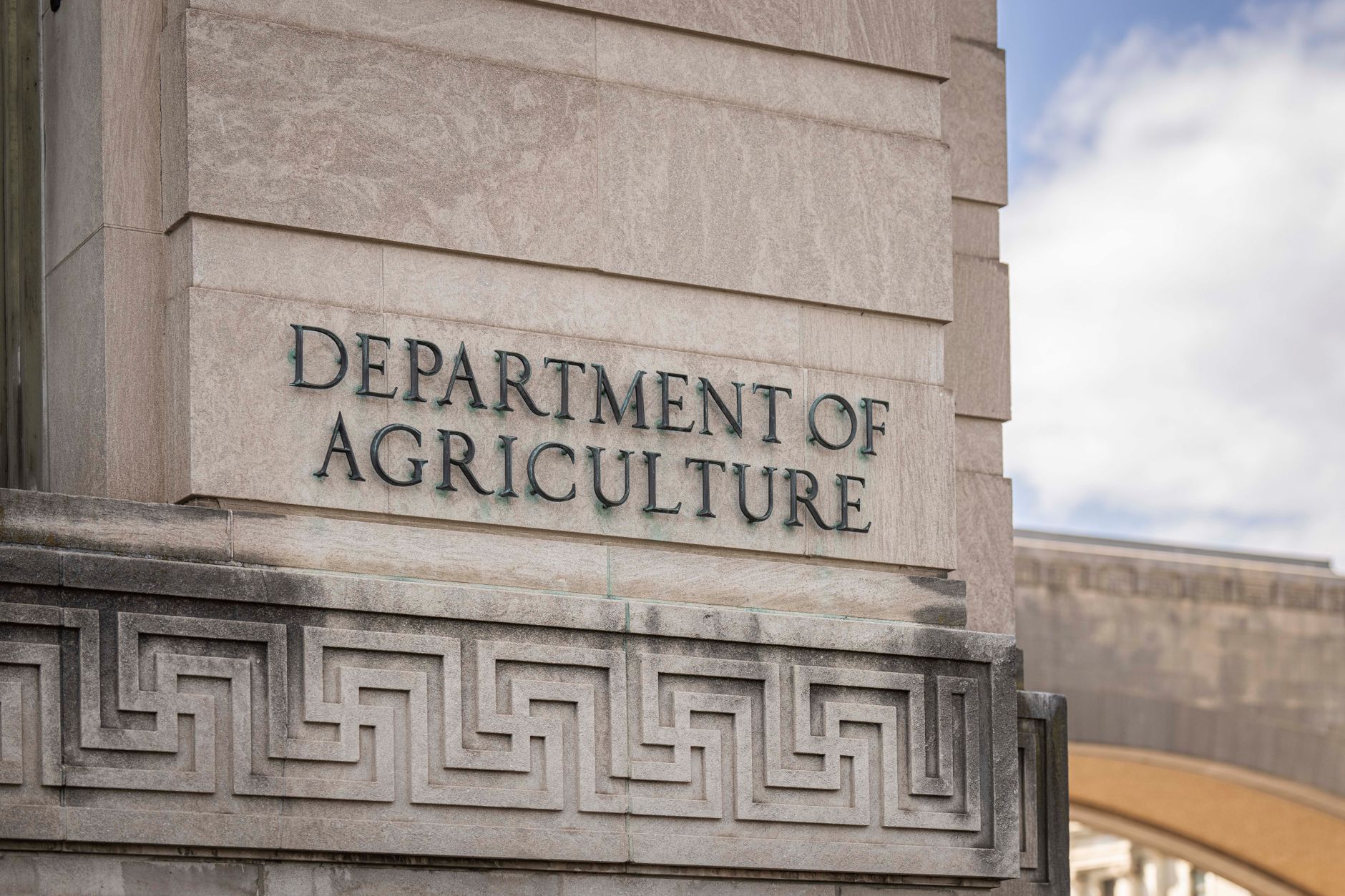
Photo by Mark Stebnicki via Pexels
Nashville. February 5, 2026. Robert F. Kennedy Jr. walks onto a stage at the National Cattlemen's Beef Association convention and tells 9,000 ranchers that "the war on protein is over." He says he eats beef twice a day. He says he's "begging" them to grow more cows. He announces that "beef is back on the menu."
Standing ovation.
And here's the thing: he had every reason to celebrate. Twenty-eight days earlier, the US government had released its official 2025–2030 Dietary Guidelines — the document that shapes school lunches, military rations, hospital food, and what your doctor tells you is healthy — and those guidelines had handed the cattle industry exactly what they wanted. Animal proteins moved to the top of the food pyramid. Red meat explicitly recommended. Full-fat dairy, butter, and beef tallow all endorsed. The protein recommendation quietly doubled, from 0.8 grams per kilogram of body weight to 1.2–1.6g/kg — convenient framing if you're selling beef.
Kennedy wasn't celebrating a scientific breakthrough. He was celebrating his own product launch.
So I did what you should always do when the government changes what it tells you to eat: I looked up who wrote it.
The Real Committee — And the Secret One That Replaced It
Here's the part they don't put in the press releases.
The US government already had a dietary guidelines advisory committee — 20 independent scientists, appointed in January 2023, who spent two full years reviewing the evidence. They submitted their report in December 2024. It ran to hundreds of pages. It recommended prominently featuring legumes and plant proteins. It said, in clear language, that diets higher in plant proteins were associated with better health outcomes. It followed the process that's been standard for decades.
The Trump administration looked at that report and rejected 30 of its 56 recommendations. Accepted 14. Partially incorporated 12.
Then they assembled a replacement: a secret nine-member panel, given three months to redo the science review that the official committee had spent two years on. No equivalent public comment period. No transparency. And when they published the final guidelines, they didn't even use the traditional website — dietaryguidelines.gov, the decades-old home of US nutrition policy. They launched a new domain: realfood.gov. Even the rebranding told you what this was.
Who were these nine people? That's the right question. The only question, really.
Seven of Nine Had Beef or Dairy Money. Seven.
STAT News and the Physicians Committee for Responsible Medicine dug into the disclosed conflicts. This is what they found:
J. Thomas Brenna, PhD — funded by the Global Dairy Platform, the National Cattlemen's Beef Association, the Texas Beef Council, General Mills, and the American Dairy Science Association. That's not one conflict. That's a portfolio.
Donald Layman, PhD — National Cattlemen's Beef Association. National Dairy Council.
Heather Leidy, PhD — National Cattlemen's Beef Association. National Pork Board. General Mills.
Ameer Taha, PhD — California Dairy. Dairy Management Inc.
Jeff Volek, PhD, RD — scientific advisor for Simply Good Foods, the company behind Atkins and Quest Nutrition. His career has been built on promoting high-fat, animal-heavy diets as nutrition science.
Ty Beal, PhD — scientific advisory committee for a livestock industry assessment project.
Michael Goran, PhD — financial ties to infant formula companies.
Seven of nine. The PCRM counted eight of nine with livestock industry funding specifically. One holdout — presumably there so they couldn't say it was unanimous.
Does anyone find it strange that the people who rewrote America's protein recommendations are funded by the companies that sell protein? Anyone?
STAT News also found that this panel had just three months to complete its scientific review — the same work the official committee had spent two years on, with public hearings and iterative peer review. Three months, no transparency, industry money. That's what your new food pyramid was built on.
I've written about how the meat industry buys government policy with $38 billion in annual US subsidies. And I've written about how 95% of the previous dietary guidelines committee had industry funding. But this is different. The previous era was quiet corruption — industry money in the background, scientists with plausible deniability. This is the industry at the podium. There's no pretense left.
What the Guidelines Actually Tell People to Eat
The policy specifics matter because they don't just affect individual choices. US dietary guidelines shape 30 million school lunches a day. Military food. Hospital menus. What doctors are trained to recommend. What insurance covers for medical nutrition therapy. These aren't suggestions — they're infrastructure.
The 2025–2030 guidelines tell you to:
- Eat red meat as part of "a variety of protein foods from animal sources"
- Drink whole milk. Use butter. Cook with beef tallow.
- Consume 1.2–1.6g of protein per kilogram of body weight — nearly double the WHO's evidence-based 0.8g/kg — with no distinction between animal and plant protein sources
- Deprioritize legumes and plant proteins, which the official DGAC had flagged as a central recommendation
And also — this is the part that made the American College of Cardiology write a formal critique in January 2026 — keep your saturated fat below 10% of calories. The same guidelines that tell you to eat red meat, full-fat dairy, butter, and beef tallow tell you to watch your saturated fat. Red meat and full-fat dairy are among the highest dietary sources of saturated fat in existence. You cannot follow both recommendations simultaneously. The contradiction isn't a nuance. It's a structural impossibility baked into the document.
The one good thing in the guidelines — discouraging highly processed food — was praised even by the critics. It was also the one recommendation that doesn't benefit the beef and dairy lobby. Make of that what you will.
What 70 Scientists From 35 Countries Said the Same Month
Here's a timeline comparison I want you to sit with.
October 3, 2025: The EAT-Lancet Commission releases its landmark 2025 report. Seventy scientists from 35 countries. No cattle lobby funding. Their conclusion: a predominantly plant-based diet could prevent up to 15 million premature deaths per year. They call for reducing animal product consumption by 22–27% globally and expanding legumes by 190%. Their report is co-chaired by Walter Willett of Harvard — one of the most cited nutrition researchers alive — and Johan Rockström of the Potsdam Institute.
January 7, 2026: The US government releases dietary guidelines written by a panel in which 7–8 of 9 members had beef and dairy industry funding.
Fifteen million preventable deaths a year. That's the scientific consensus. That's 70 researchers from 35 countries working without industry money.
And the response from the US government was to give us beef tallow.
I keep those two facts next to each other every time someone tells me the nutrition science is "unclear." It isn't. The science is clear. The money is what's unclear.
What Marion Nestle Said — and What It Cost Her Nothing to Say Because She's Been Right for 40 Years
Marion Nestle has been tracking the food industry's influence on nutrition policy since the 1990s. Her book Food Politics mapped this playbook before most of the panel members had finished their PhDs. When the new guidelines dropped, she published a BMJ editorial — formally titled "Politics trump science in new US dietary guidelines" — and called the replacement panel "a hastily assembled panel of meat, dairy, and fat diet industry insiders."
On her blog, she described the guidelines as "muddled, contradictory, ideological, and retro" — guidelines that "dismiss 75 years of research favoring diets higher in plant foods" and "take us back to the diets of the 1950s when everyone was eating lots of meat and dairy and heart disease was rampant."
Walter Willett — Harvard, EAT-Lancet co-chair, 40 years of nutritional epidemiology — called the inverted food pyramid "the most egregious aspect of the new guidelines."
Dr. Frank Hu, chair of Harvard's Department of Nutrition, said: "Substantially raising overall protein intake without distinguishing between different protein sources may have unintended long-term health implications." Translation: source matters. The science says it matters. These guidelines pretended it doesn't.
On February 13, 2026, a formal letter of protest went out. 210 researchers, doctors, and dietitians signed it — including Nestle, Willett, and Christopher Gardner from Stanford, who had himself served on the official DGAC that was bypassed. They called the guidelines "at best, confusing, and, at worst, harmful to public health." They said the guidelines failed their legal mandate to be grounded in scientific evidence. And they pointed out — again — the logical impossibility of simultaneously recommending red meat and limiting saturated fat.
Two hundred and ten experts saying the same thing. How many experts does it take before this makes the evening news?
This Isn't a Trump Problem. It's a Structural Problem.
I want to be clear about something, because I've seen this framing go wrong in both directions.
This is not purely a "Trump did this" story. The industry capture of US nutrition policy predates this administration by decades. A 2022 study in Public Health Nutrition found that 95% of the Biden-era DGAC members had industry ties — 19 of 20 scientists, connected to ILSI, General Mills, Dannon, Abbott, and Kraft. The revolving door between industry and dietary policy has been spinning for a long time. I'm not softening what happened in January 2026 — it's dramatically worse. But the root is structural, not partisan.
What IS new: the speed, the brazenness, the complete abandonment of process. Three months instead of two years. A new website instead of the official one. The secretary of HHS announcing guidelines at a cattle ranchers' convention and telling them he eats beef twice a day. That's not industry quietly funding science. That's industry at the microphone.
The PCRM filed a formal petition to the HHS and USDA Offices of Inspector General the day after the guidelines dropped, asking that they be withdrawn and reissued with proper process. As of this writing, those guidelines are still in force and still being cited by doctors, school districts, and nutrition programs across the country.
What You Can Actually Do
If you're outside the US, your government's dietary guidelines almost certainly still reflect the scientific consensus. The WHO, Canada, the UK, Australia, and most of Europe haven't followed the US in this direction. The evidence on plant protein is overwhelming and global — Roman gladiators trained on barley and beans, the Stanford Twins trial shows identical muscle hypertrophy on matched plant and animal protein, the EAT-Lancet Commission conclusion is the consensus of 70 researchers from every major scientific tradition on earth.
If you're in the US: your doctor may be citing the new guidelines without knowing who wrote them. Ask. Bring this up. "The panel that wrote these had seven of nine members funded by beef and dairy" is information your physician might not have.
And if you're still eating a primarily animal-based diet partly because you've been told by authorities it's the healthy choice — know that those authorities had industry funding when they said it. The food hasn't changed. The science hasn't changed. Who's deciding what counts as science changed.
Share this post. Not for traffic. Because the people around you heard "new dietary guidelines, eat more protein" and didn't hear "the people who wrote that are funded by the National Cattlemen's Beef Association." That gap is doing a lot of work for a lot of industries.
And look at the EAT-Lancet 2025 report. Seventy scientists, thirty-five countries, no beef money. Then compare it to realfood.gov. One of them is science. You can figure out which.
References
- STAT News — "Panel behind new dietary guidelines had financial ties to beef, dairy industries" (January 7, 2026)
- STAT News — "Behind new dietary guidelines: Industry-funded studies, opaque science, crushing deadline pressure" (January 17, 2026)
- Nestle M. "Politics trump science in new US dietary guidelines." BMJ 2026;392:s143
- Nestle M. Food Politics blog — analysis of the 2025-2030 dietary guidelines (January 2026)
- Physicians Committee for Responsible Medicine — New Dietary Guidelines panel conflicts of interest (January 2026)
- PCRM — Petition to HHS and USDA to withdraw guidelines (January 8, 2026)
- CSPI — 210 health and science professionals' open letter (February 13, 2026)
- American College of Cardiology — 2025-2030 dietary guidelines cardiovascular analysis (January 2026)
- Harvard T.H. Chan School of Public Health — dietary guidelines analysis (January 2026)
- EAT-Lancet 2025 Commission — "Global food transformation needed to save millions of lives" (October 3, 2025)
- Mialon M, et al. "Conflicts of interest for members of the US 2020 dietary guidelines advisory committee." Public Health Nutrition. 2022;27(1):e69
- AgWired — RFK Jr. at CattleCon 2026 (February 5, 2026)
- NPR — "RFK Jr. speaks about beefing up red meat consumption at Cattle-Con" (February 7, 2026)
- Civil Eats — "Public health groups challenge Trump administration dietary guidelines" (January 9, 2026)
- CSPI — "What changed in the new dietary guidelines and why it matters" (2026)