January 2025. Diane Morgan — Philomena Cunk, Kath from After Life, one of the funniest people on British television — is doing charity work for an animal organization. She's already a vegetarian. She's already been doing this for years. Then she sees some footage.
And that's it. Done.
"A lot of factory farming is horrific," she said afterward. "When I saw all of that and how they're treated, I just thought, I can't do this anymore."
Not a debate. Not a scientific paper. Not someone's very compelling Facebook comment. Footage.
Here's the question worth asking: why? Why does footage do in thirty seconds what fifty years of philosophical argument hasn't? And more importantly — what does that mean for how you talk to people?
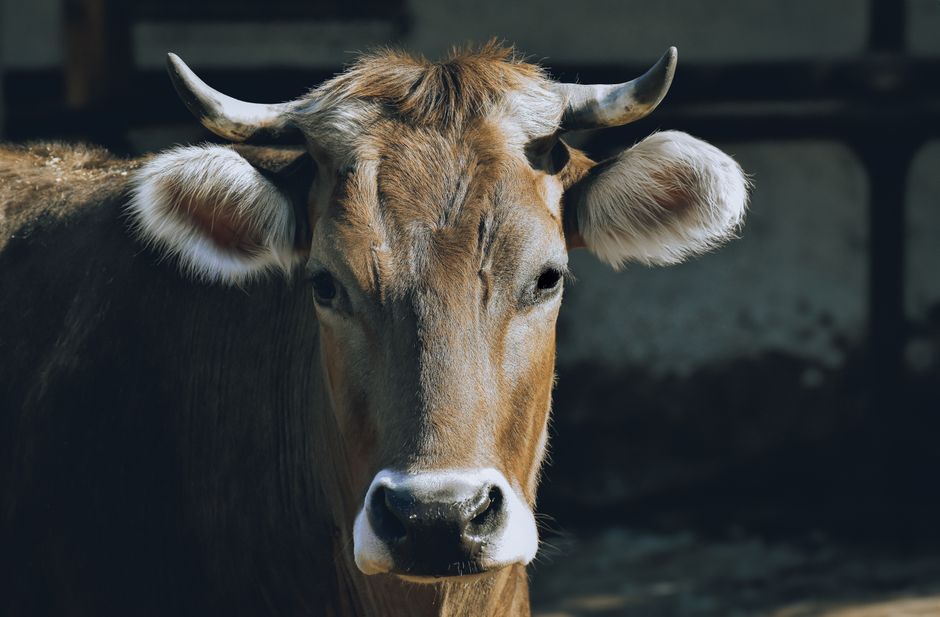
Photo by Alexas Fotos via Pexels
The Argument That Wasn't
Here's what didn't convert Diane Morgan: Peter Singer's Animal Liberation, first published in 1975. Fifty years of philosophical argument. The utilitarian case for veganism — if suffering is bad, and animals suffer, then causing unnecessary animal suffering is bad — is airtight. It's been airtight for half a century. Nobody has seriously refuted it.
And yet.
The environmental argument has been equally solid. The FAO calculated that livestock accounts for 14.5% of global greenhouse gas emissions — more than all transportation combined. The IPCC has flagged dietary change as one of the highest-impact individual actions a person can take. Peer-reviewed studies pile up every year. Scientists have been publishing this data for decades.
None of it moved the needle the way one video did.
I've had the argument conversations. Plenty of them. I know the feeling: you lay out the data clearly, you answer the protein objection, you counter the "but lions" thing, you cite the Oxford EPIC study. The person nods. Says "that's interesting." Orders the same thing on Wednesday. Every excuse was already preloaded before you started.
But when a 2019 survey asked 12,814 vegans across 97 countries what first made them seriously consider changing, the numbers were stark. Documentaries: 21.9%. Internet videos and raw footage: 14.4%. Social media video content: a significant chunk of the 13.2% who cited social media. Added together, roughly 36% of vegans point to footage — not argument, not a book, not a debate — as the primary trigger.
Books? 3.4%.
The Videos That Actually Work
Gary Yourofsky's speech has 35 million cumulative views. Earthling Ed's content has been watched by millions. Cowspiracy. Earthlings. Dominion. Watch conversion story threads on Reddit for ten minutes and the same titles keep appearing. "Earthlings destroyed me." "Cowspiracy changed everything." "I stumbled onto an Earthling Ed clip at 2am and didn't sleep."
Diane Morgan's version was less cinematic — cumulative exposure through charity work rather than one breakthrough documentary. But the mechanism was identical. She saw something she couldn't un-see.
That phrase turns up in the academic literature too. A qualitative study published in Society & Animals is literally titled "Once You Know Something, You Can't Not Know It: An Empirical Look at Becoming Vegan." The researchers found a consistent two-stage pattern across every conversion account they studied. Stage one: an encounter with footage or a farm visit that pierces the dissociation most people maintain about where their food comes from. Stage two: either repression (put it away, go back to normal) or orientation (seek more information, make a decision).
Most people repress. Most people watch the same clip and feel nothing six months later. But some don't. That gap — between the people who forget and the people who change their entire lives — is where things get interesting.
The Counterintuitive Finding Nobody Talks About
Here's where I have to tell you something uncomfortable. Especially if you've ever sent a factory farming video to a friend and waited hopefully for them to call you.
A 2021 randomized controlled trial, published in Nutrients, tested a 20-minute animal welfare documentary on participants. The intervention group showed 68% expressing intent to reduce meat consumption versus 20% in controls. A 3.4x difference in stated intent. That's enormous, right?
Twelve days later, the researchers measured actual consumption.
The effect was essentially zero. P = 0.91. No meaningful difference in what either group ate. They ran two additional experiments to verify. Same result both times.
The Faunalytics research organization ranked documentaries 9th out of 16 tested intervention methods for actually changing dietary behavior. Not first. Ninth.
So which is it? Does footage convert people or not? The retrospective surveys say yes. The randomized trials say barely.
Both are telling the truth. They're just measuring different things.
What "Tipping Point" Actually Means
Footage doesn't convert people from scratch. What footage does is provide the final push to people who were already primed to change.
Diane Morgan wasn't some random omnivore who stumbled onto a farming video. She'd been doing animal charity work for years. She was already a vegetarian. The footage didn't create her values — it resolved a cognitive dissonance she'd been carrying for a long time. She already cared. The footage gave that care somewhere to go.
A study published in the Journal of Retailing and Consumer Services in 2022 tracked 478 vegans and found that "catalytic experiences" — defined as visceral encounters with animal cruelty — played a significant moderating role in sustaining vegan diets, particularly among people who already had ethical concerns. The catalytic experience didn't create the concern. It activated a concern that was already there.
The meta-analysis in Appetite (2021), covering 100 studies and 24,817 subjects, found that animal welfare interventions increased the likelihood of reduced meat consumption by 22% overall — and the effect was dramatically higher when emotional content was paired with a clear, specific call to action.
That's the piece most advocates miss.
The retrospective surveys overrepresent footage because the people completing them are the ones for whom footage worked. You're not surveying the millions of people who watched Cowspiracy and went home and grilled a steak. Footage opened the door. But something else — a social connection, a practical challenge, a community — is what got people through it.
What Diane Morgan's Brain Did Next
She struggled with cheese. She mentioned it specifically — couldn't find a vegan version that didn't taste like glue sticks. So she quit cold turkey instead. Then, four weeks later: "my brain just went, 'Oh, I don't like cheese anymore, it smells like socks.'"
That's not the footage talking anymore. That's identity shift. She stopped being someone who eats cheese, so her brain stopped wanting it. The feeling changed first. The behavior followed. The perception adjusted after that.
This is what the social psychology research on behavior change has documented for decades: you often need to act first, then believe. The footage creates an emotional disruption. The decision to try — even for one week, even imperfectly — is what triggers the identity shift that makes it stick.
I noticed this in my own transition. The arguments didn't change what I felt about food. But once I stopped buying it, once I physically acted differently, the psychological shift followed in ways I hadn't expected. Things that used to seem normal started seeming strange. Not because of a new argument — because my behavior had already changed, and my identity caught up.
The same process Diane Morgan described. The brain follows the behavior. Not the other way around.
The One Thing Worth Doing
If you talk to people about veganism — and most of us do, whether we plan to or not — stop trying to win. Start trying to show.
Not the three-hour full-slaughter documentary dropped on someone who hasn't thought about this before. That can trigger defensive shutdown rather than openness. Start smaller. More targeted. Share something that connects to what that person already cares about. If they're curious about what the transition actually feels like, give them that first. If they love animals, one specific story about one specific animal — not a montage, a story.
Then give them a practical on-ramp. One week. One day. A single plant-based meal. Veganuary. Something specific and achievable that lets them act before they've fully resolved the belief question.
The footage opens the door. The practical step is what gets someone through it. The brain does the rest, once the behavior starts.
Diane Morgan watched something she couldn't un-watch. She already cared about animals. The footage activated what was already there. And she had somewhere to go next.
That's the whole playbook. It's not about being right. It's about being the catalyst at the right moment for the right person.
Know someone who might be ready? Send them this post on the psychological shift before you send them anything graphic. See what happens.
References
- Mathur MB, et al. "Interventions to reduce meat consumption by appealing to animal welfare: Meta-analysis and evidence-based recommendations." Appetite. 2021. https://pmc.ncbi.nlm.nih.gov/articles/PMC9205607/
- Mathur MB, et al. "Effectiveness of a Theory-Informed Documentary to Reduce Consumption of Meat and Animal Products." Nutrients. 2021. https://pmc.ncbi.nlm.nih.gov/articles/PMC8708224/
- Faunalytics. "Tactics in Practice: The Impact of Vegan Documentary and Video." faunalytics.org
- Vomad. "2019 Global Vegan Survey." 12,814 respondents, 97 countries. vomad.life/survey
- Graca J, et al. "Veganism: Theory of Planned Behaviour, Ethical Concerns and the Moderating Role of Catalytic Experiences." Journal of Retailing and Consumer Services. 2022. sciencedirect.com
- "Once You Know Something, You Can't Not Know It: An Empirical Look at Becoming Vegan." Society & Animals. ResearchGate
- Diane Morgan quotes via Plant Based News. plantbasednews.org
- FAO. "Tackling climate change through livestock." fao.org