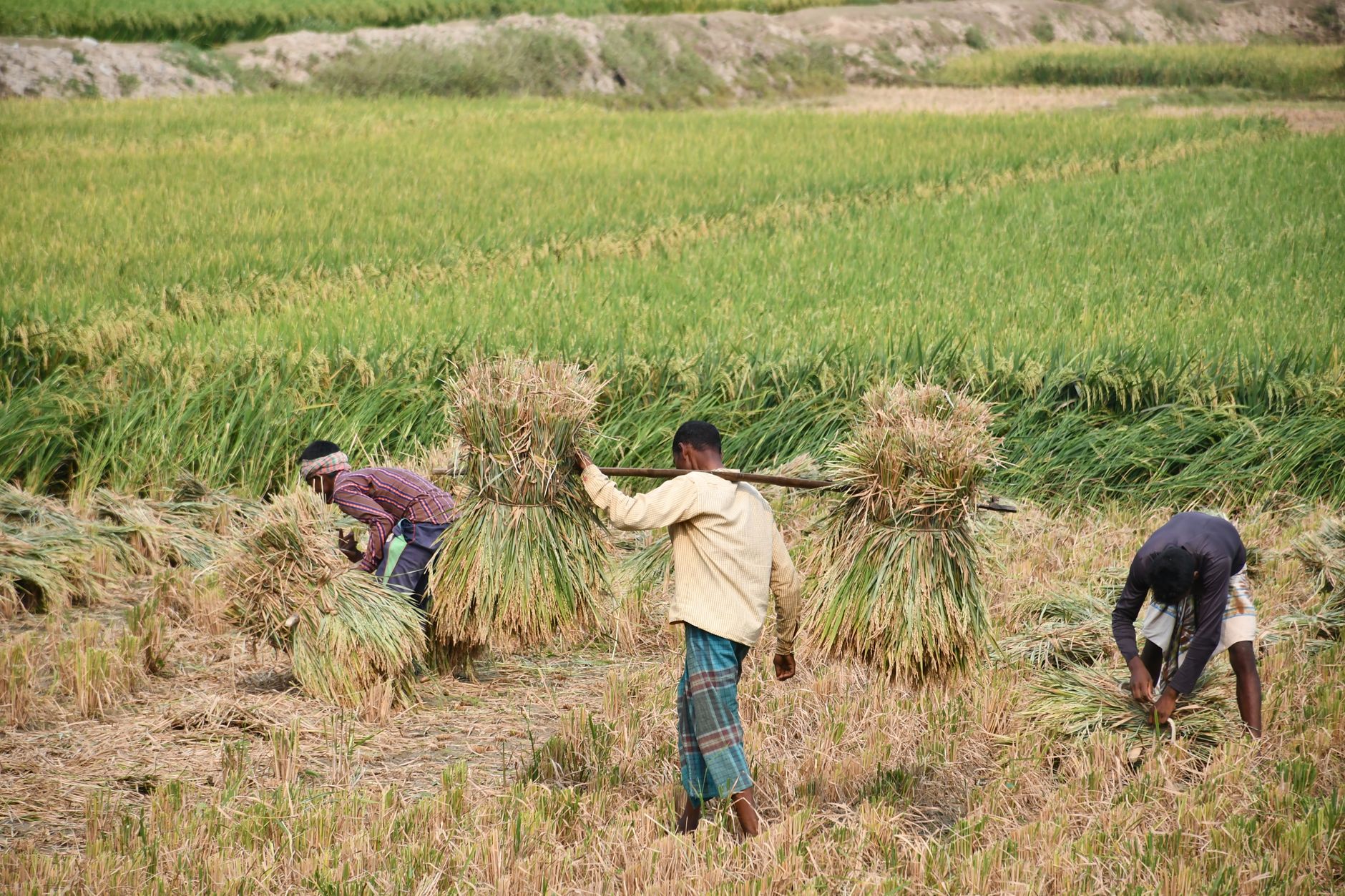
Photo by masudar rahman via Pexels
How do you tell half the planet they've been eating wrong for nine thousand years?
If you're a keto influencer with a podcast and a $60 supplement stack, apparently you just do it with confidence.
Rice has been feeding humanity since before written language. First domesticated along the Yangtze River in what is now China — archaeological evidence from sites like Shangshan places rice cultivation at around 10,000 years before present. Through empires, plagues, wars, famines, ice ages, and the entire written history of our species, rice has been there. Feeding more people than any other food that has ever existed.
And now, in 2026, a guy who sells MCT oil on Instagram wants to tell four billion people they've been doing it wrong.
I genuinely cannot decide if that's delusional or just very good marketing.
According to the FAO's 2024 Statistical Yearbook, rice remains the world's most critical staple crop, with over half the global population depending on it daily. In parts of Southeast Asia, rice provides 60 to 70% of daily calories. It's the foundation of Japanese cuisine, Indian cuisine, West African cuisine, Caribbean cuisine, Chinese cuisine. Every culture that encountered rice looked at it and said: yes. This is the food.
The keto influencers decided they knew better.
Japan Has a 4% Obesity Rate. They Eat White Rice Three Times a Day.
Let me give you one number that should end this conversation.
Japan's obesity rate: 4.5% for men, 3.8% for women. The United States: roughly 40%. That's not a rounding error. That's a different planet.
A 2024 review published in the American Journal of Lifestyle Medicine projected Japan's female life expectancy will reach 91 years by 2065 — among the highest ever recorded in human history. Cardiovascular disease accounts for just 15.3% of deaths in Japan, compared to being the leading killer in Western nations. Japan's dietary foundation? White rice at breakfast, lunch, and dinner. The same white rice your favorite low-carb influencer calls “empty calories.”
It's not just Japan. A 2024 meta-analysis in Advances in Nutrition reviewed 41 studies across Asian populations and found that high adherence to traditional Asian dietary patterns — plant-dominant, grain-rich, low in meat — was associated with a 16 to 22% lower risk of cardiovascular disease compared to Western-style diets. That's the largest and most current body of evidence on rice-eating populations.
And if you want something more granular: a 2022 cohort study from the Takayama region of Japan — following 29,000 men and women for over 14 years — found that men in the highest quartile of rice consumption had a 22% lower risk of cardiovascular disease mortality compared to those who ate the least. Published in Nutrients. Peer-reviewed. Open access. Not a podcast. Not a supplement brand's white paper. Actual science with actual numbers.
The people living longest on this planet are not counting carbs. They're eating them.
The Grain That Crossed the Atlantic
Here's something your keto influencer definitely won't tell you.
Enslaved Africans from the rice-growing regions of West Africa — the Senegambian coast, Sierra Leone, Guinea-Bissau — were specifically sought by Carolina planters in the 1700s because they had rice cultivation expertise. Colonial Americans didn't know how to grow it in the Low Country climate. The Gullah-Geechee people, enslaved across South Carolina and Georgia, brought with them thousands of years of rice knowledge across the Middle Passage. They built the rice economy of the American South. Carolina Gold rice — once called the finest rice in the world — exists because enslaved people refused to let their agricultural knowledge die.
Their labor and expertise are literally in the DNA of American food culture. And now that same culture turns around and tells people rice is unhealthy.
I need you to sit with that for a second.
What Actually Made America Sick (Hint: Not Rice)
Rice didn't produce the obesity epidemic. The Standard American Diet did.
Ultra-processed food in every aisle. Sugar hidden in ketchup, bread, salad dressing, yogurt, and granola bars. Meat at every meal, in quantities that would be incomprehensible in Japan or India. Drive-throughs engineered to override satiety signals. Portions sized for a family of four, sold to one person. Factory-farmed chicken pumped with antibiotics.
That's the diet that produced record rates of heart disease, type 2 diabetes, and 80 million Americans now living with prediabetes.
And instead of reckoning with that — because reckoning with it would mean confronting the food industry, which has lobbyists and $38 billion in government subsidies — Western diet culture decided the problem was carbohydrates. Specifically the carbohydrates that billions of poor, brown, and Asian people eat. The ones that don't come in expensive packages with "ketogenic" printed on the label.
The global keto industry was worth over $12 billion in 2023. Someone is getting very rich telling you rice is the enemy.
The science on keto isn't flattering. Harvard Health's analysis found that keto raises LDL cholesterol, that short-term weight-loss benefits fade, and that it doesn't meet standards for a healthy long-term diet. A January 2026 analysis published by ScienceDaily found that keto weight loss may come with hidden metabolic costs. Research from the University of Utah found ketogenic diets associated with fatty liver disease and impaired blood sugar regulation — changes that appeared within days of starting.
But sure. Rice is the problem.
Is White Rice Actually Bad for You? Let's Look at the Evidence.
The "rice is high glycemic" argument sounds scary until you look at how people actually eat.
I eat rice every single day. It goes next to lentils. Or stir-fried vegetables. Or kidney beans with tomatoes and garlic. Nobody on Earth eats plain white rice and nothing else — except perhaps in a nutrition researcher's controlled lab setting. The glycemic impact of rice drops dramatically in a real meal. A 2023 study in Nutrients confirmed that eating rice with pulses or legumes substantially reduces its glycemic response — protein and fiber create a barrier to enzyme accessibility, slowing how fast carbohydrates hit the bloodstream. Every traditional cuisine already knew this. They just called it dinner.
And the "empty calories" label? A 2024 review in Frontiers in Nutrition found that rice contains nine categories of functional nutritional components — proteins, active polysaccharides including resistant starch and dietary fiber, unsaturated fatty acids, flavonoids, free radical scavengers, and essential trace elements including iron, zinc, and selenium. That's not empty. That's a food.
Countries eating the most rice — Japan, South Korea, Vietnam, Thailand — do not have the world's highest diabetes rates. That distinction belongs to the United States, Saudi Arabia, and other cultures built on ultra-processed food and animal products. The correlation runs in exactly the opposite direction from what the low-carb world tells you.
The Arsenic Question (I'll Answer This One Honestly)
Yes, rice absorbs more inorganic arsenic from soil than other grains. This is real. The FDA acknowledges it and has set limits on arsenic in infant rice cereal — reasonable, because infants are more vulnerable. I'm not going to pretend this concern doesn't exist.
Here's the actual risk in numbers. The FDA's own risk assessment estimates roughly 4 additional cancer cases per 100,000 people over an entire lifetime of rice consumption. Four per hundred thousand. Over a lifetime. That's a 0.004% lifetime risk increase.
Now compare that to processed meat, which the WHO classifies as a Group 1 carcinogen — the same evidence category as tobacco and asbestos. Every 50 grams of processed meat daily — barely two strips of bacon — increases colorectal cancer risk by 18%.
Not 0.004%. Eighteen percent.
The people writing scared headlines about arsenic in rice are not writing the same headlines about the bacon breakfast sandwich. That asymmetry tells you everything about whose food gets scrutinized in this culture and whose doesn't.
Practical steps if this still concerns you: rinse rice before cooking, cook with extra water and drain the excess (reduces arsenic content by up to 40%), and vary your grains. These are sensible precautions, not reasons to eliminate a food that has sustained billions of humans for thousands of years.
Rice + Legumes = The Protein Argument Is Over
The most common objection to plant-based eating is protein. The answer has been sitting in every rice-eating culture for thousands of years: combine it with legumes.
Rice and beans together form a complete protein — all nine essential amino acids that your body can't synthesize on its own. Rice is low in lysine but high in methionine. Beans are the exact opposite. They're metabolically complementary. This wasn't discovered by nutritionists in 1970. It was independently discovered by billions of people across West Africa, Central America, South Asia, and East Asia — dal and rice, rice and black beans, jollof rice with lentils, every day, in every country where rice grows.
You can eat complete protein, feel full, and feed a family — all for under $2 a serving. The people telling you this is impossible are selling you something that costs $60 a month and arrives in a branded shaker bottle.
What I Actually Eat
I eat rice almost every day. Jasmine when I'm making something Thai-inspired. Basmati with red lentil dal when I want something filling and deeply satisfying. Brown rice for grain bowls when I want more fiber and a nuttier bite. Sometimes just plain white rice with soy sauce and roasted vegetables at the end of a long day when I don't have the energy to think.
I'm not doing this because I've "optimized my macros." I'm doing it because it's good, it's cheap, and it connects me to something real. I’ve lived in Southeast Asia for years now — rice is at every meal, the way bread is in France, the way pasta is in Italy. A meal without it genuinely feels incomplete to me.
And when I think about rice's history — domesticated 9,000 years ago along the Yangtze, spread across the Pacific, carried across the Atlantic in the memory and hands of enslaved people who refused to let their food knowledge die — that feels like it means something. Food is culture. Food is history. Food is survival across generations.
Brown rice has more fiber and B vitamins. Black rice has anthocyanins — the same antioxidants in blueberries, except nobody's charging you $8 for a small container of it. White rice has been the world's most important food for millennia and will still be feeding billions of people long after the current crop of diet trends has crashed and been forgotten.
The grain that built civilization doesn't need a rebrand.
The Real Problem Isn't Rice
Here's what I find most revealing about the anti-carb movement: it has almost no overlap with the populations who actually eat a lot of carbs.
The keto market is dominated by North America and Western Europe. The people eating 300 to 500 grams of rice a day who also have some of the lowest rates of heart disease and obesity in the world — Japanese, Thai, Vietnamese, Filipino, South Indian populations — largely aren't buying into it. They're eating what their grandparents ate. They're living past 80.
The food that feeds half the planet isn't a problem to be solved. The $12 billion diet industry that profits from making you afraid of it is.
Next time someone sends you a video about eliminating rice, ask them one question: what's the alternative? Expensive meat and factory-farmed eggs? Protein bars with ingredient lists that read like chemistry homework? Meals that cost $15 a serving and require a subscription box?
Or: rice and lentils. Rice and black beans. Rice and roasted vegetables with soy sauce. A week of real food for under $25, sourced from the same grain that has fed human civilization longer than the written word has existed.
Your diet guru can have his ribeye. I'll take the rice.
Send this to whoever told you rice was the problem. Then go make a bowl.
References
- PLOS ONE (2022) — New evidence for rice harvesting in the early Neolithic Lower Yangtze River, China
- FAO Statistical Yearbook 2024 — World Food and Agriculture
- American Journal of Lifestyle Medicine (2024) — Japan's longevity: Life expectancy, diet, and cardiovascular outcomes
- Advances in Nutrition (2024) — Asian dietary patterns and cardiovascular disease risk: meta-analysis of 41 studies
- Nutrients (2022) — Takayama Study: Rice consumption and cardiovascular disease mortality in Japan
- Blue Zones — The Okinawa Diet: Eating and Living to 100
- Nutrients (2023) — Glycemic index of rice and the role of meal context in glucose response
- Frontiers in Nutrition (2024) — Functional components of rice and their health implications
- Harvard Health — Keto diet is not healthy and may harm the heart
- ScienceDaily (January 2026) — Keto diet weight loss may come with a hidden metabolic cost
- FDA — Arsenic in Food
- FDA — Arsenic in Rice and Rice Products: Risk Assessment
- WHO/IARC — Carcinogenicity of the consumption of red meat and processed meat